The first impression a new roofer has to earn
For a startup, the website is often the first place a homeowner decides whether the business looks real. If the company has not yet built a permissioned photo library or collected enough customer stories to publish, the site should not pretend otherwise. It can still feel credible by showing the founder’s actual role, the types of roofs served, and a plain-language description of how estimates or inspections work.
A useful comparison is this: one homepage says, “We fix roofs fast and always do top-quality work,” with no proof beside it. Another says, “Owner-operated roofing service focused on inspections, repairs, replacements, and emergency tarping, with estimates explained before work begins.” The second version is less dramatic, but it gives a buyer something concrete to trust.
What to put on the homepage when you do not have a long track record
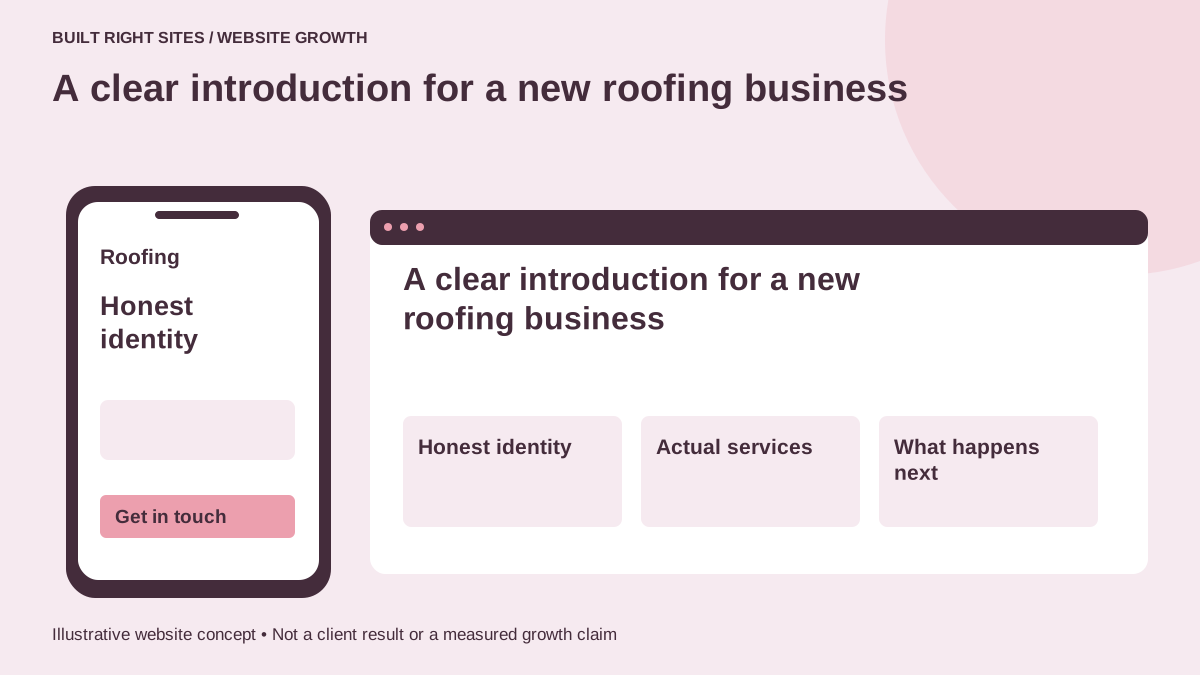
The most helpful roofing homepages for a new business usually answer three questions quickly: who is behind the company, what roofs are actually handled, and what happens after a homeowner reaches out. That can include the owner’s name, trade background, license or insurance details if applicable, service areas, and a short explanation of the process from first call to finished job.
Illustrative images can still be used, but they should be labeled as concept visuals if they are not from your own jobs. That protects trust better than using borrowed-looking photos or vague promises. A clear homepage can also point visitors to a service page for repairs, replacements, storm damage, or inspections, so they do not have to guess whether the company is a fit.
Explore websites for roofing businesses for an example of how this can work on a site.
Why search visibility matters, and what it can realistically do
When someone needs roof help, many begin with a search such as the type of problem, the city, or the service they need. A well-built site can give search engines enough structure to understand those pages, and sitemaps aid discovery, without assuring indexing. That is useful for a new business because discovery starts with being understandable, not flashy.
Still, a website is not a switch that creates demand. It can support discovery when pages clearly describe services, locations, and contact options, but it cannot promise rankings or a flood of leads. For a new roofing company, the goal is simpler: make it easy for a real homeowner to find the right page, understand the offer, and decide whether to ask for an estimate.
The Website plan is $399 one time, with no required monthly fee: up to 6 service pages, 10 service-area pages and 2 website tools. Hosting is optional at $9/month, or take the finished files and arrange your own hosting. AI tools are an optional, separately quoted add-on. Website + Marketing is $699/month, with no separate setup fee: hosting, every tool for your trade including AI tools, call tracking, ongoing SEO and Google Business Profile optimization, and two blog posts a month. Choose an optional ad budget separately; it is not part of the $699 fee. Compare both plans and their scope.
A buyer journey that feels real instead of invented
Picture a homeowner whose roof started leaking after a storm. They search for help, open several roofing sites, and quickly rule out the ones that feel generic or overpromised. Then they land on a newer company site that says the owner is local, the business handles emergency tarping and replacement, and the photos are clearly marked as examples rather than claimed results. The visitor is not “sold”; they are oriented.
Before, the site might have read: “We are the best roofing company in town.” After, it could say: “We inspect the damage, explain whether repair or replacement makes sense, and schedule the next step if the roof is safe to proceed.” That before/after shift matters because it reduces confusion. The buyer does not need more hype; they need clarity about risk, scope, and response time.
When a redesign is worth it before the first big season
If the current site is thin, outdated, or built like a placeholder, a redesign can be the difference between looking temporary and looking ready to work. For a new roofing company, the right time to rethink the site is often before the first busy storm season, before the phone starts ringing, or before you begin marketing any service area you want to serve seriously.
Built Right Sites offers business websites and a homepage concept before deciding to pay, which can be helpful if you want to see a roofing homepage that reflects your services near the start. The point is not to pack every feature into every package, but to make sure the site represents the business honestly and gives customers a believable path from search to contact.
A new roofing website does not need a long history to feel trustworthy. It needs clear identity, truthful service detail, and enough structure for people and search systems to understand what the company does. That combination will not guarantee leads, but it can make a young roofing business look ready for the next call.
Related articles
- The Website plan is $399 one time, with no required monthly fee: up to 6 service pages, 10 service-area pages and 2 website tools. Hosting is optional at $9/month, or take the finished files and arrange your own hosting. AI tools are an optional, separately quoted add-on. Website + Marketing is $699/month, with no separate setup fee: hosting, every tool for your trade including AI tools, call tracking, ongoing SEO and Google Business Profile optimization, and two blog posts a month. Choose an optional ad budget separately; it is not part of the $699 fee. Compare both plans and their scope.
- When your roofing website needs an update
See how your next website could work
A clear site gives interested customers a useful next step. Explore a homepage for your business, then decide whether it fits.
See my free homepageSources and further reading
- Google: Sitemaps — Sitemaps aid discovery, not guaranteed indexing.
Sources checked October 18, 2026. The examples and practical recommendations are our editorial guidance. AI-assisted drafting; reviewed before publication.