The homeowner who is browsing, not booking
Picture a homeowner who saved ten kitchen photos and searched for “modern white cabinets” after dinner. They are not ready to hire yet. They want to know whether their space can handle an island, whether the walls can move, and whether the remodeler does projects like theirs.
A strong website gives that visitor a safe first step. Instead of pushing for an immediate call, it can show completed kitchens, explain the kinds of projects you take on, and answer the questions a browsing homeowner is already thinking about.
What the site should explain before the first call
The most useful remodeling websites make the project feel understandable. That means clear photos, short notes about what changed in each kitchen, and plain-language details about layout changes, storage issues, appliance choices, and the kinds of homes you work in.
It also helps to spell out the limits. If you only take full kitchen remodels, or if certain structural changes need extra planning, say so. That kind of clarity can save time for both sides and bring in better-fit consultation requests.
Explore websites for remodeling businesses for an example of how this can work on a site.
Why inspiration pages and project pages do different jobs
Inspiration pages attract the dreamer. Project pages help the ready-planner. A visitor comparing backsplashes may just want ideas, while a visitor reading about a galley-to-open-concept remodel is trying to judge whether their own kitchen is a fit for your process.
One useful distinction is to separate “what it could look like” from “what it took to get there.” The first keeps attention. The second builds confidence. A remodeler’s website works best when both are present, because people often need to see the finished look and the practical work behind it.
For the next part of this process, read Attract the landscape projects you want.
Search discovery and the limits of it
Search can bring new people to your site when their query matches a page title and topic. Google says titles should describe pages clearly. That simple idea matters because a homeowner scanning results is trying to find a page that sounds relevant before they ever click.
But discovery is not the same as a booked consultation. A website can help someone find you, yet the page still has to answer the real concern: can this remodeler handle my kind of kitchen, my budget range, and my level of readiness? If the page only shows pretty images, it may attract attention without moving the homeowner forward.
A better before-and-after journey for the next inquiry
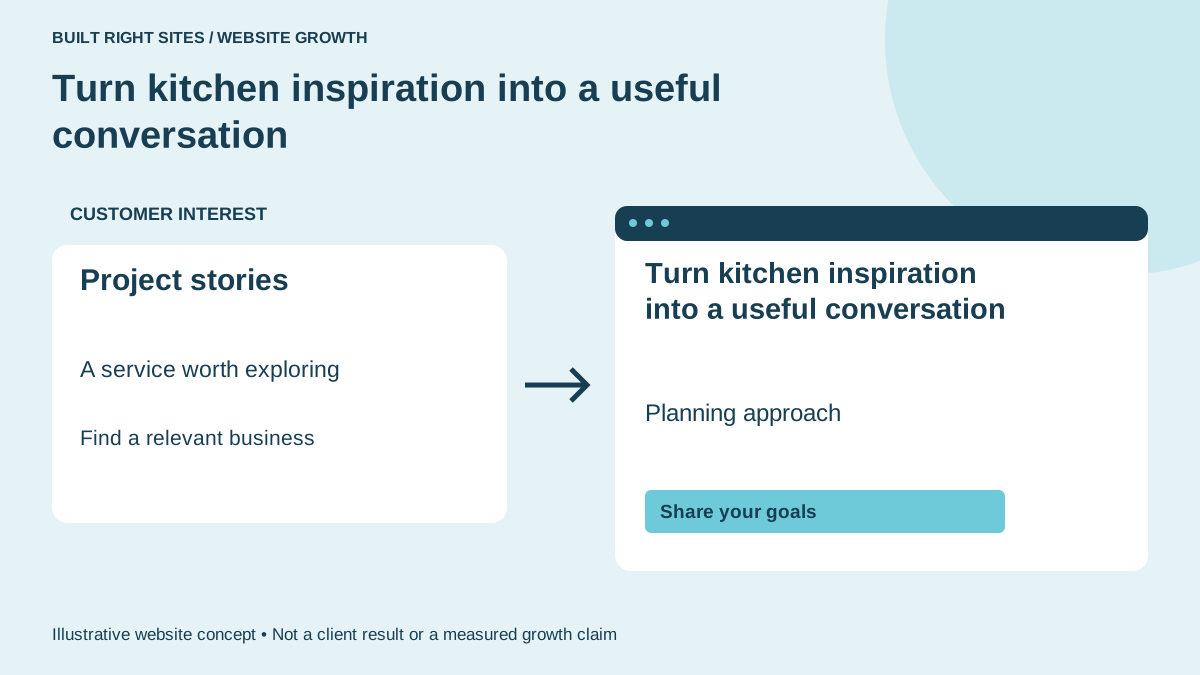
Hypothetical example: before, a visitor lands on your site, sees a gallery, and leaves because nothing explains where to start. After, the same visitor sees a project story, notices a note about a small kitchen with limited wall space, reads a short explanation of the planning discussion, and fills out the contact form with a specific question.
That shift does not require a complicated website. It requires a homepage that reflects the kind of remodels you actually want, pages that describe the work in human terms, and one clear next step for people who are ready to talk. If you are considering a website that reflects your services, Built Right Sites offers a homepage concept before you decide to pay.
A kitchen remodeler’s website should help visitors recognize themselves, understand the scope of the work, and decide whether a conversation makes sense. It can support consultations by filtering for fit and clarifying the next step, while still being honest about the limits of what a website alone can do.
Related articles
See how your next website could work
A clear site gives interested customers a useful next step. Explore a homepage for your business, then decide whether it fits.
See my free homepageSources and further reading
- Google: Title links — Titles should describe their pages clearly.
Sources checked October 18, 2026. The examples and practical recommendations are our editorial guidance. AI-assisted drafting; reviewed before publication.