When a single page is enough
A one-page site can be a smart fit when your business is centered on one clear service and one kind of customer. Think of a painter who handles interior repaints for homeowners in a tight service area. In that case, the visitor mainly wants to know: what do you do, where do you work, what does the finished result look like, and how do I contact you?
The strength of a single page is focus. It keeps the message simple, reduces decision fatigue, and makes it easier for a visitor to understand the offer quickly. The limit is that a one-page site has little room to explain multiple service categories, compare options, or address different customer questions without turning into a long scroll that feels crowded.
Why separate pages help a growing trade business
A growing trade business usually starts to outgrow the one-page model when customers begin searching for different things. A sign shop may need to explain storefront signs, vehicle graphics, banners, and installation as separate services. Each one serves a different buyer intent, and each may deserve its own page because the questions, examples, and trust signals are not the same.
Separate pages also make the site easier to navigate for people who are comparing services. Someone looking for a new storefront sign does not want to read a long paragraph meant for banner buyers. A page for each service gives you space to show the process, describe the typical project type, and answer the specific concerns that matter before someone reaches out.
Explore Built Right Sites website examples for an example of how this can work on a site.
The search journey starts with clarity
For many local businesses, discovery starts with a problem, not a brand name. A homeowner may search for a roofing company after spotting a leak. A business owner may search for a sign company after opening a new location. In both cases, the website has to make the service obvious fast, because the visitor is deciding whether this business is relevant enough to contact.
That is where page structure and basic SEO work together. Google says sitemaps aid discovery, without assuring indexing. In practical terms, separate pages can help a search engine understand what your site covers and help a person land on the exact service they need. But a website is not a promise of rankings, and it will not create demand that is not already there.
For the next part of this process, read Build service pages before blog posts.
A before-and-after example from a real buyer mindset
Hypothetical example: a shop owner launches with one page that says, “We design and install signs.” It sounds fine, but a restaurant owner looking for a channel letter sign still has to scan past details about banners, permits, and other work before finding anything relevant. The visitor may leave simply because the site feels too general for the question they came to answer.
Now compare that with a site that has clear sections for storefront signs, interior signs, vehicle graphics, and installation. The same restaurant owner lands on the storefront sign page, sees matching photos, reads a short explanation of the typical project, and knows exactly where to click next. The business has not changed, but the website now reflects how customers actually shop.
Choosing the structure before the redesign starts
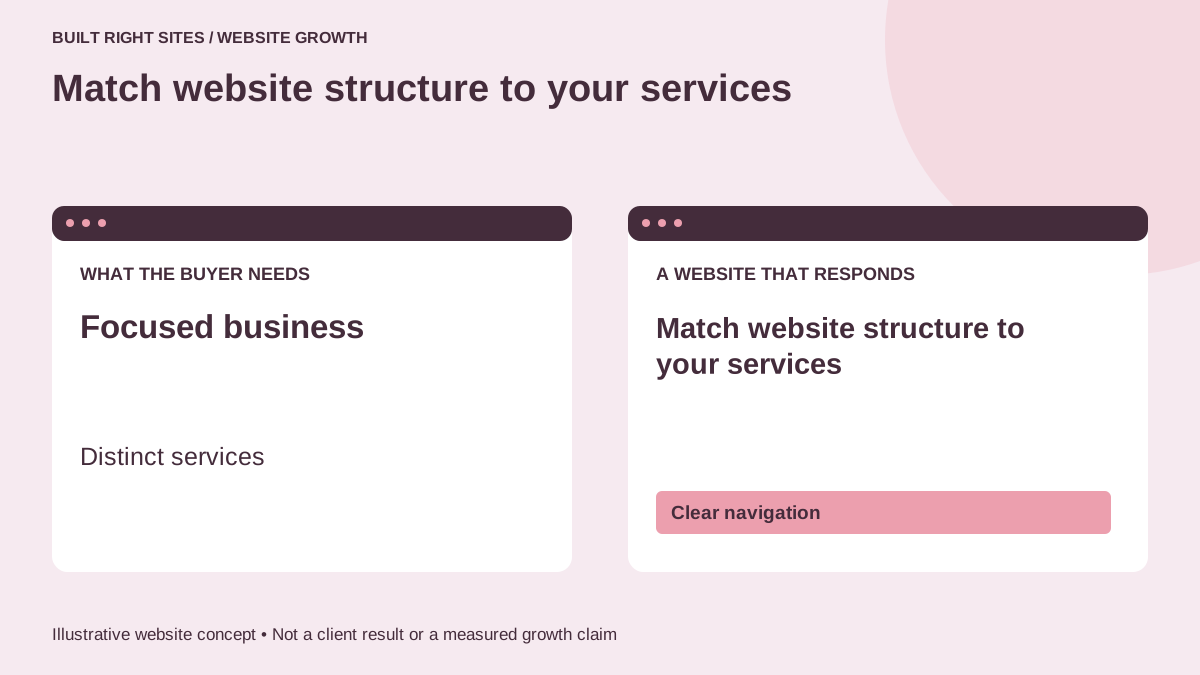
The easiest way to decide is to map the site to the business, not to a trend. If you have one service, one buyer type, and one main outcome, a concise page may be enough. If you have several services, several buyer questions, or different kinds of projects that need separate explanations, a multi-page site usually makes more sense.
This is also where a homepage concept can help before you commit. A home page that reflects your services near the start of the process can show whether the business story feels clear in one view or needs more supporting pages. The goal is not to make the site bigger for its own sake; it is to make the next customer step obvious, whether that is calling, requesting a quote, or exploring a specific service.
A trade website should match how customers choose, not just how many pages sound modern. One page can be enough for a narrow offer, but several pages usually work better when your services, customers, and search paths are distinct enough to deserve their own space.
Related articles
- Build service pages before blog posts
- The Website plan is $399 one time, with no required monthly fee: up to 6 service pages, 10 service-area pages and 2 website tools. Hosting is optional at $9/month, or take the finished files and arrange your own hosting. AI tools are an optional, separately quoted add-on. Website + Marketing is $699/month, with no separate setup fee: hosting, every tool for your trade including AI tools, call tracking, ongoing SEO and Google Business Profile optimization, and two blog posts a month. Choose an optional ad budget separately; it is not part of the $699 fee. Compare both plans and their scope.
See how your next website could work
A clear site gives interested customers a useful next step. Explore a homepage for your business, then decide whether it fits.
See my free homepageSources and further reading
- Google: Sitemaps — Sitemaps aid discovery, not guaranteed indexing.
Sources checked October 18, 2026. The examples and practical recommendations are our editorial guidance. AI-assisted drafting; reviewed before publication.