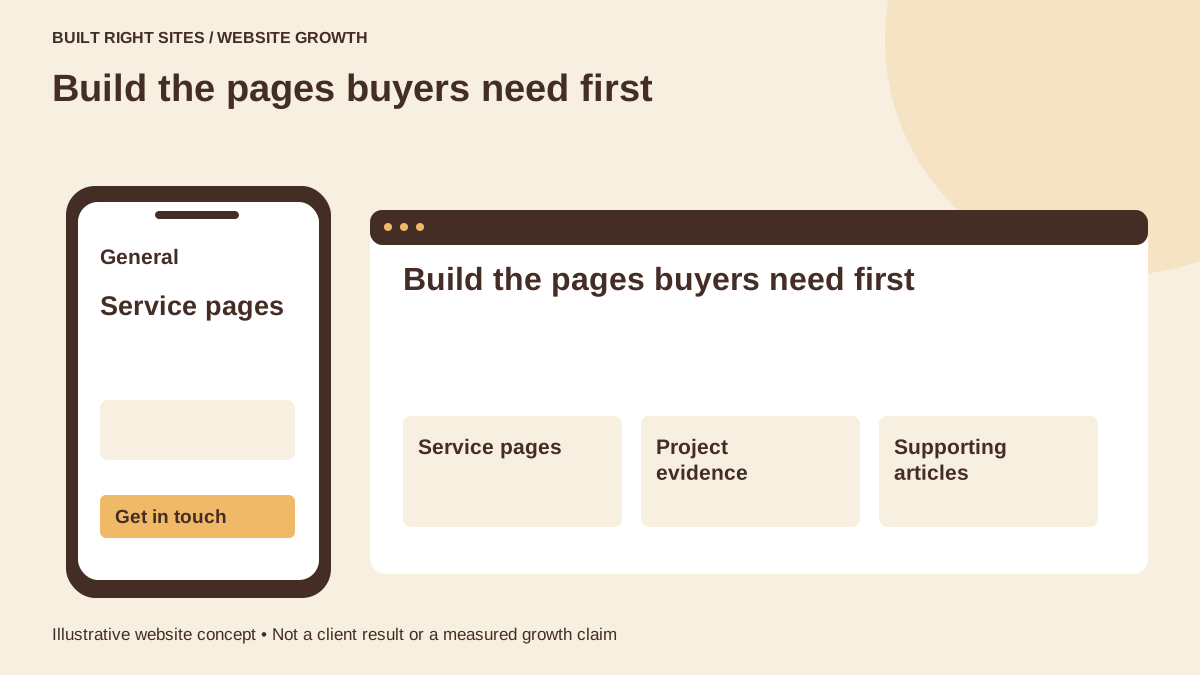
Start with the pages a buyer needs first
Imagine a sign shop owner who gets most requests from people searching for storefront lettering, vehicle wraps, or yard signs. If the website opens with a long blog feed and only a vague About page, the visitor still has to hunt for the basics. A clearer starting point is a homepage, service pages, project examples, and a contact page that answers the simple question: can this business solve my problem?
That structure matters because people comparing local providers usually want to know what is offered, whether the work looks relevant, and how to reach someone. A blog can help later, but the first job of the site is to make the business easy to understand without extra digging.
Why blog posts alone rarely carry the buying decision
A blog post can explain a topic, but it usually does not replace the need for a dedicated service page. Someone searching for “roof replacement” or “commercial signs near me” is often closer to choosing a vendor than learning the basics. They need a page that describes the service, the typical job types, and what makes that service distinct for your area and your customers.
Google says to prioritize useful content for intended readers. In practice, that means a local website should answer the questions buyers actually have, not just publish articles for the sake of publishing. A post about maintenance tips may support visibility, but it will not usually do the work of a service page that matches a specific search intent.
Explore Built Right Sites website examples for an example of how this can work on a site.
A simple site map that fits a small local business
For a smaller sign company, roofing contractor, or similar local business, the most practical early structure is often straightforward: homepage, services, project examples, and contact. The homepage should explain the business in plain language. Service pages should separate the main offerings so each one can speak to a different buyer need. Project pages or galleries can show what the work looks like in the real world.
This setup also helps you avoid making every page do everything. If your homepage is trying to cover every service, every city, and every question, the message gets thin. Separate pages let you be specific without turning the site into a cluttered brochure. That is useful for both people and search discovery, even before any blog articles are added.
For the next part of this process, read Choose one page or a fuller website.
When supporting articles make sense after the core pages
Once the main pages are in place, blog content can support the site in a more focused way. A sign business might publish articles about choosing materials, preparing artwork, or understanding permit-related questions. A roofing business might answer common homeowner concerns about inspections, storm damage, or replacement timing. These pieces are most helpful when they point readers back to the service pages that explain what the business actually sells.
A hypothetical before-and-after example: before, the site has one homepage, a few generic paragraphs, and a blog with six posts nobody can easily connect to a service. After, the site has a clear service page for each core offering, a project section with visual proof, and then a smaller set of articles that support those pages. The difference is not just design. It is clarity.
Where discovery fits, and where it stops
Service pages can improve how a website is understood by both visitors and search engines, while blog posts can add supporting context around common questions. That can help a local business become more discoverable for specific searches, but it does not mean traffic or leads are automatic. Search visibility depends on many factors, and no website can guarantee that every visitor turns into a customer.
For an owner deciding whether to build service pages before more posts, the practical answer is usually yes if the site is still missing the pages buyers need most. If you are considering a website that reflects your services clearly, Built Right Sites can help you start with that kind of structure and show a homepage concept before you decide to pay.
If your website is still light on service pages, that is usually the first gap to fix before adding more blog content. A local buyer who is ready to contact a business wants a clear path from problem to service to proof to contact, and the site should make that path easy to follow.
Related articles
See how your next website could work
A clear site gives interested customers a useful next step. Explore a homepage for your business, then decide whether it fits.
See my free homepageSources and further reading
- Google: People-first content — Prioritize useful content for intended readers.
Sources checked October 18, 2026. The examples and practical recommendations are our editorial guidance. AI-assisted drafting; reviewed before publication.