What buyers are really trying to find
A person searching for a sign company is usually not browsing for inspiration. They are trying to solve something specific: a tenant needs a new sign before opening, a lit sign stopped working, or a contractor needs temporary graphics for a job site. If your website treats all of those needs as one generic “signs” page, the visitor has to do extra work just to understand whether you handle their request.
A stronger website matches real search intent with clear service paths. That means a person looking for repairs should not land on a page that reads like a new-build showcase, and someone needing a storefront sign should not have to dig through a gallery of unrelated print work. Search visibility matters here too, because SEO helps search engines understand content. For a local shop, that understanding starts with clear service names, local context, and pages that describe what you actually do.
Why a homepage should act like a guide
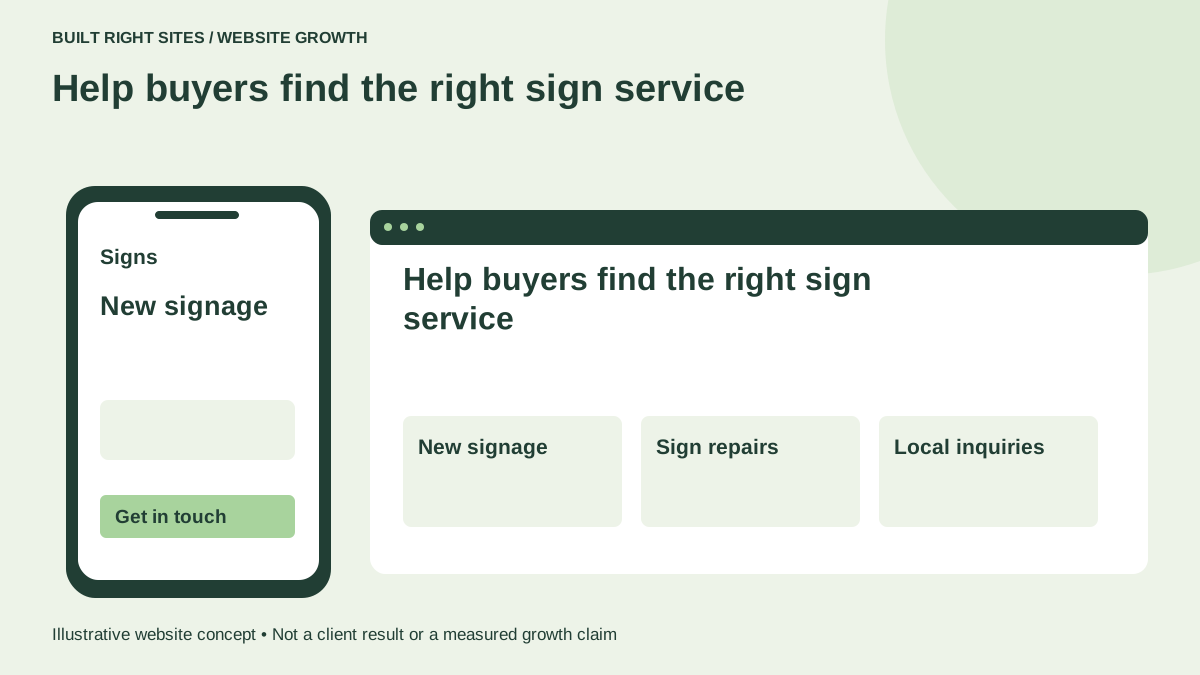
A homepage for a sign shop should answer three questions fast: what you make, who you serve, and what a visitor should do next. A practical homepage might highlight new signage, sign repairs, and printed graphics as separate choices, with each one leading to a page that explains the process in plain language. That structure keeps a first-time visitor from guessing whether they are in the right place.
Hypothetical example: a restaurant owner types “sign repair near me” after a channel letter goes dark. If the homepage only says “custom signs for every business,” that owner may leave. But if the homepage presents a visible repair path, the owner can click through, see the kinds of issues handled, and submit the right details the first time. The website does not create the need; it reduces friction when the need already exists.
Explore websites for signs businesses for an example of how this can work on a site.
Separate pages for separate services
Many sign shops try to cover everything with one services page, and that usually makes the page too vague. New signage, repair work, and print jobs often involve different questions, different timelines, and different proof points. A storefront-sign buyer wants to know about design, fabrication, and installation. A repair buyer wants to know what information to share. A print buyer may care more about sizing, material, and pickup or delivery details.
Think of the website like a routing system. If a visitor wants a monument sign, the page should speak to that. If they need window graphics, the page should speak to that instead. This is where a focused website can help search discovery in a modest but practical way: it gives each service a clearer home, instead of forcing every visitor through one catch-all page. In a hypothetical before-and-after example, “We do all kinds of signs” becomes “New storefront signs, sign repairs, and printed graphics for local businesses.” The second version is easier for both people and search engines to understand.
For the next part of this process, read Turn channel letter searches into leads.
What local SEO can and cannot do
Local SEO can help your pages show up for searches that already point toward a nearby provider, but it is not magic, and it does not replace a clear site. If the wording on your website is muddy, search engines have less to work with and visitors may still be unsure what you offer. For a sign shop, the goal is not to rank for every possible sign term. The goal is to align the pages you already need with the searches your buyers are likely to use.
That means writing service pages that sound like real customer questions: Can you repair this? Do you make new signs for retail openings? Can you help with business graphics? You do not need to explain every technical detail on the homepage. You need enough detail to show fit, set expectations, and invite the next step. The limit is simple: a website can make it easier to be found and contacted, but it cannot guarantee more inquiries or convert a poor offer into a good one.
A redesign decision that fits the real buying path
If your current website looks nice but sends every visitor to the same place, a redesign may be more useful than another round of small edits. The question is not whether the site has enough photos. It is whether a busy buyer can quickly choose the right path. A good sign shop site often works best when it mirrors the way customers actually shop: by service, urgency, and local need.
For a hypothetical owner, the turning point might sound like this: “We keep getting calls, but people ask the wrong questions because the site is too general.” After the redesign, the same owner can describe the business more clearly: “We make new storefront signs, handle sign repairs, and create printed graphics for local companies.” That kind of wording gives the visitor a better starting point. If you are considering a website that reflects your services clearly, Built Right Sites offers a homepage concept before you decide to pay.
A sign shop website works best when it helps local buyers match their need to the right service without guessing. Clear service pages, simple wording, and a homepage that points people in the right direction can improve discovery and inquiry quality, while staying realistic about what a website can and cannot do.
Related articles
See how your next website could work
A clear site gives interested customers a useful next step. Explore a homepage for your business, then decide whether it fits.
See my free homepageSources and further reading
- Google: SEO Starter Guide — SEO helps search engines understand content.
Sources checked October 18, 2026. The examples and practical recommendations are our editorial guidance. AI-assisted drafting; reviewed before publication.