What the searcher is really trying to figure out
Someone typing channel letters into a search bar is often comparing more than products. They want to know if a sign shop works with retail storefronts, restaurants, multi-tenant buildings, or other locations where exterior branding matters. They may also be asking a hidden question: can this shop handle my size, my building type, and my budget reality without wasting my time?
A good website speaks to that thinking in plain language. Instead of only showing a gallery and a phone number, it can explain which kinds of businesses usually ask about channel letters, what visual styles the shop actually offers, and what happens after the first inquiry. That makes the visit feel useful before anyone ever fills out a form.
The service page should answer fit before features
A strong channel letter page is not just a product description. It should help a visitor decide whether to move forward by describing who the work fits, what design directions are available, and what information the shop will review later, such as location details and any permitting questions. That keeps the page focused on relevance instead of trying to explain every technical detail at once.
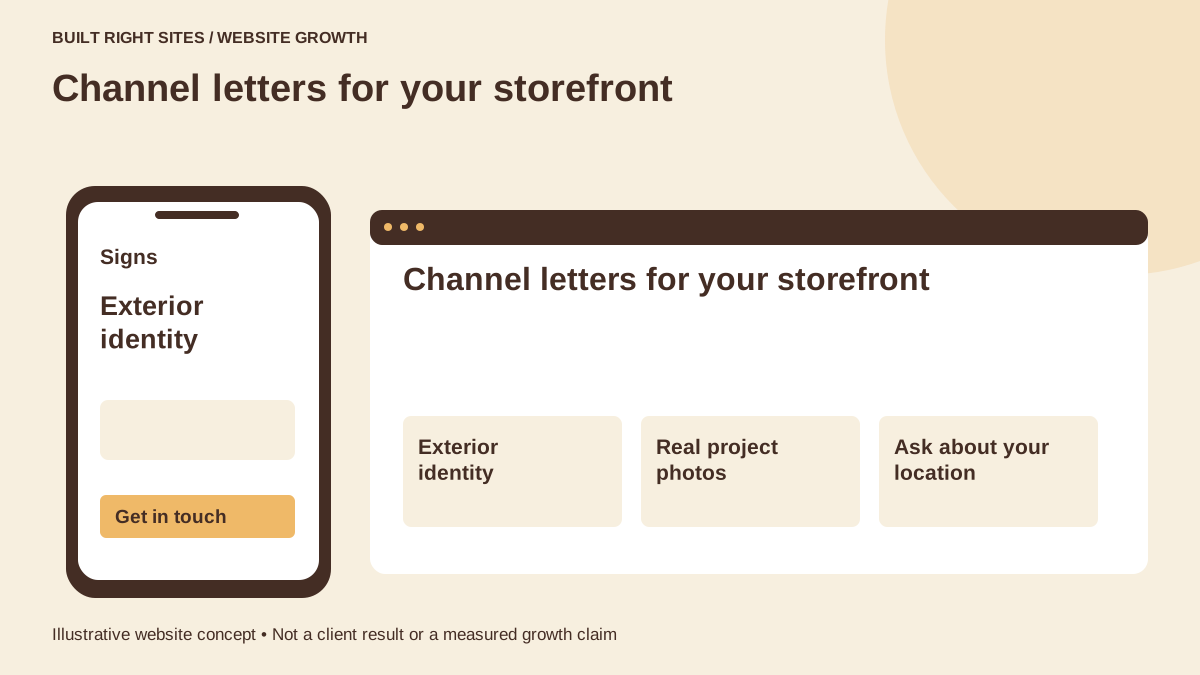
This is where many sign websites miss the mark. They lead with broad promises or generic signage language that never tells the owner whether the company actually handles the kind of storefront project they have in mind. A tighter page can name the business types served, show real project photos, and invite the visitor to ask about their location only after they understand the basics.
Explore websites for signs businesses for an example of how this can work on a site.
A hypothetical buyer journey from vague search to useful inquiry
Hypothetical example: a cafe owner searches after hearing that channel letters could help the storefront stand out at night. The first site they open shows only stock photos and broad claims, so they close it. The second site opens with a storefront-focused headline, examples of different face colors and lighting looks, and a short note about reviewing location conditions later. That second visit feels more like a conversation than a sales pitch.
Now imagine the before-and-after inquiry. Before: “Do you do signs?” After: “We have a corner storefront with an old cabinet sign and want channel letters for the front elevation. Can you tell us whether that kind of project is a fit?” The website did not create the need; it helped the buyer name the project clearly enough to reach out with useful details.
For the next part of this process, read Help more customers find your sign shop.
Where search visibility helps, and where it stops
For local sign shops, search visibility matters because people often begin with a product or problem, not a company name. Google Search Console reports search visibility. That kind of visibility can show whether pages are being found, but it does not replace a page that explains the service in a way a real buyer can understand.
That limit matters. A website can help the right page appear in the right search context, but it cannot force a visitor to contact you. If the page is too vague, too technical, or too promotional, the search visit may end without an inquiry. The goal is not to chase every searcher; it is to make the channel letter shopper feel like they are in the right place.
Why the homepage still matters for the sign shop owner
Many owners start by thinking only about a service page, but the homepage shapes first impressions. A homepage that reflects the shop’s actual services, the kinds of storefronts it works with, and the general process for starting a conversation can make the rest of the site easier to trust. That is especially helpful when the buyer is comparing a few local shops and wants to see which one feels most relevant.
If you are considering a new website, this is where a homepage concept can help you picture whether the site matches your sign business before you decide to pay. Built Right Sites builds business websites and offers a homepage concept before deciding to pay, which can be useful when you want the site to reflect your services without overcomplicating the message.
For a sign business, the best website does not try to sound like every other contractor or promise outcomes it cannot control. It helps channel letter shoppers understand fit, see what styles are possible, and decide whether to ask a better question. That is often the difference between a casual browse and a relevant inquiry.
Related articles
See how your next website could work
A clear site gives interested customers a useful next step. Explore a homepage for your business, then decide whether it fits.
See my free homepageSources and further reading
- Google: Search Console — Search Console reports search visibility.
Sources checked October 18, 2026. The examples and practical recommendations are our editorial guidance. AI-assisted drafting; reviewed before publication.