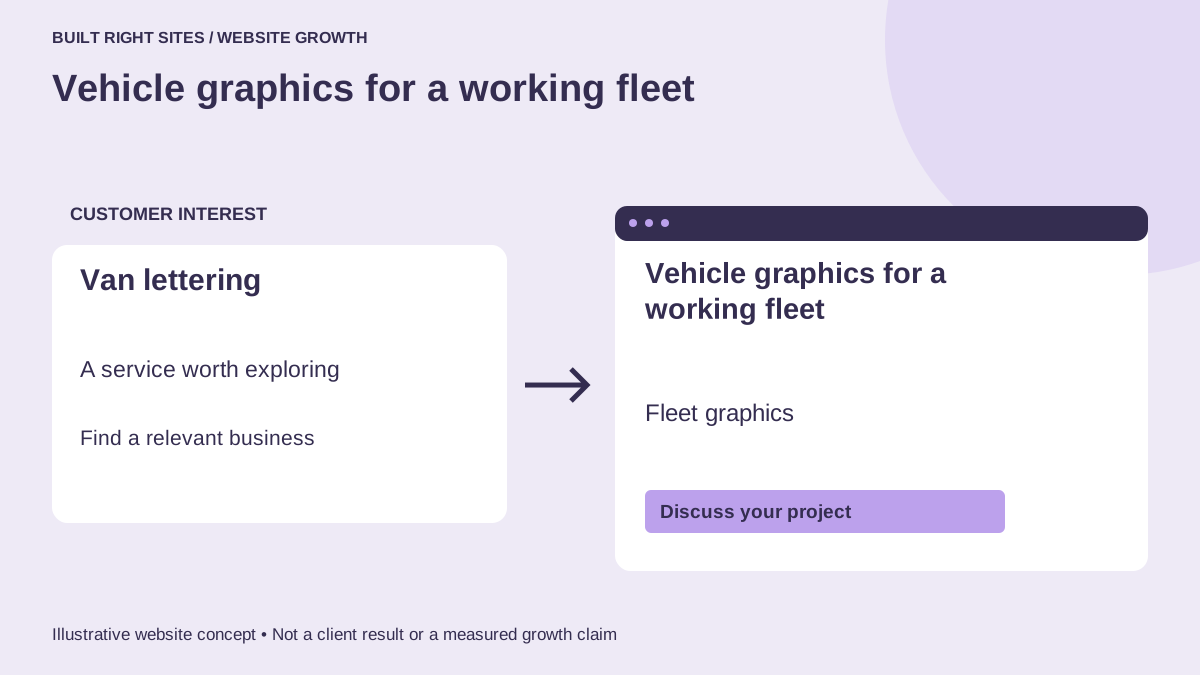
When a van-lettering search turns into a real inquiry
Picture a local contractor searching for van lettering after noticing one of his trucks looks dated. He does not arrive with a polished project brief. He arrives with a truck count, a rough timeline, and a few questions about whether the shop handles simple lettering, partial wraps, or a larger fleet update. That is where the website matters: it should answer the first round of questions before the owner has to explain the same basics on the phone.
A useful site makes the next step obvious. Instead of sending every visitor to a generic gallery, it can speak to vehicle-specific jobs, explain the kinds of vehicles the shop works on, and invite a more qualified inquiry. For a signs business, that usually means helping the buyer see the difference between “nice pictures” and “this team understands working vehicles.”
Why vehicle-specific proof works better than a broad portfolio
A portfolio page can be impressive and still leave a buyer uncertain. A roofing company, electrician, or service contractor usually wants to know whether your shop has handled cargo vans, pickup trucks, trailers, or mixed fleets. If the site only shows attractive images with no context, the visitor still has to guess whether the work is relevant to their job.
A stronger approach is to show vehicle-specific proof alongside a short explanation of what was done and why it matters. For example, a page might separate van lettering, fleet graphics, and trailer branding so the buyer can quickly match their need to your service. That does not guarantee a call, but it does reduce the feeling that the buyer is sorting through unrelated examples. The source note here is simple: Google says titles should describe their pages clearly. That same idea helps service pages, too.
Explore websites for signs businesses for an example of how this can work on a site.
A sample opening that sounds like the service you actually sell
Many sign company sites lose the first opportunity because the page starts too broadly. A visitor looking for vehicle graphics does not need a manifesto about branding. They need a direct opening that says what the shop does, who it helps, and what happens next. A clear service-page introduction can do that without sounding stiff.
For a hypothetical example, compare these two openers. Before: “We create custom graphics for businesses of all sizes.” After: “Vehicle graphics for working fleets, from single vans to multi-vehicle updates, with design and installation that fit your schedule.” The second version is better because it narrows the service and signals real-world use. It also sets up a better inquiry form: the buyer can tell you the vehicle type, number of units, and whether they need lettering, wraps, or both.
For the next part of this process, read Help your sign business win more work.
What discovery can do, and what it cannot do
A website can help your sign shop show up when someone is already looking for a solution, but it cannot manufacture interest out of nowhere. That matters because some owners expect a new site to act like a salesperson by itself. In reality, the site is more like a well-organized first conversation. It can help the right people find you, understand you, and decide whether to ask for a quote.
For vehicle wrap and lettering work, discovery usually starts with basic search intent: someone is trying to solve a fleet-identification problem, not browse art. If the page matches that intent clearly, the prospect is more likely to stay long enough to learn about your services. But if the site is vague, overly general, or written like a brochure for every possible product, visitors may leave still unsure whether you handle their type of vehicle.
Choosing a homepage that fits the buyer’s next step
Homepages often try to do too much at once. For this kind of business, the better move is to make the first screen answer a practical question: “Can this shop handle my vehicle graphics job?” If the answer is easy to see, the visitor can move toward a quote request instead of hunting through menus. That is especially important for owners who want more vehicle wrap inquiries from their website without making every page feel crowded.
A hypothetical buyer journey makes the point. A shop owner clicks a search result, lands on a homepage, and sees a vehicle-focused headline, a short explanation of services, a few relevant project examples, and a simple next step to discuss the job. He does not need a hard sell; he needs confidence. If your current site makes that path awkward, a new website that reflects the vehicle projects you want to attract can make the business feel more ready for the kind of inquiry you want. Built Right Sites offers a homepage concept before deciding to pay, which can help you judge whether the direction fits before moving ahead.
The best vehicle-wrap website does not chase every visitor. It helps the right visitor recognize your shop, understand the work, and take a clear next step. When your pages speak to real vehicle jobs instead of vague design talk, inquiries are more likely to be relevant, and that is where a new site can start to matter.
Related articles
See how your next website could work
A clear site gives interested customers a useful next step. Explore a homepage for your business, then decide whether it fits.
See my free homepageSources and further reading
- Google: Title links — Titles should describe their pages clearly.
Sources checked October 18, 2026. The examples and practical recommendations are our editorial guidance. AI-assisted drafting; reviewed before publication.