Where referrals usually stall
A lot of sign businesses already get attention through word of mouth, truck lettering, chamber referrals, and local visibility. The problem is not always demand. It is that the prospect still needs to decide whether your shop is the right fit for a specific job.
If your homepage only says “welcome” and shows a few random images, a business owner may like your work and still leave without contacting you. A better site gives them a path from curiosity to action by matching the kind of sign they need, the type of business they run, and the next step they should take.
A storefront buyer’s search journey
Hypothetical example: a retailer opens a second location and hears your name from another merchant. The owner lands on your site from a search or direct link, but they are not yet shopping for “signs” in general. They are trying to figure out whether you can help with exterior storefront signs, interior branding, or a fresh replacement after opening day.
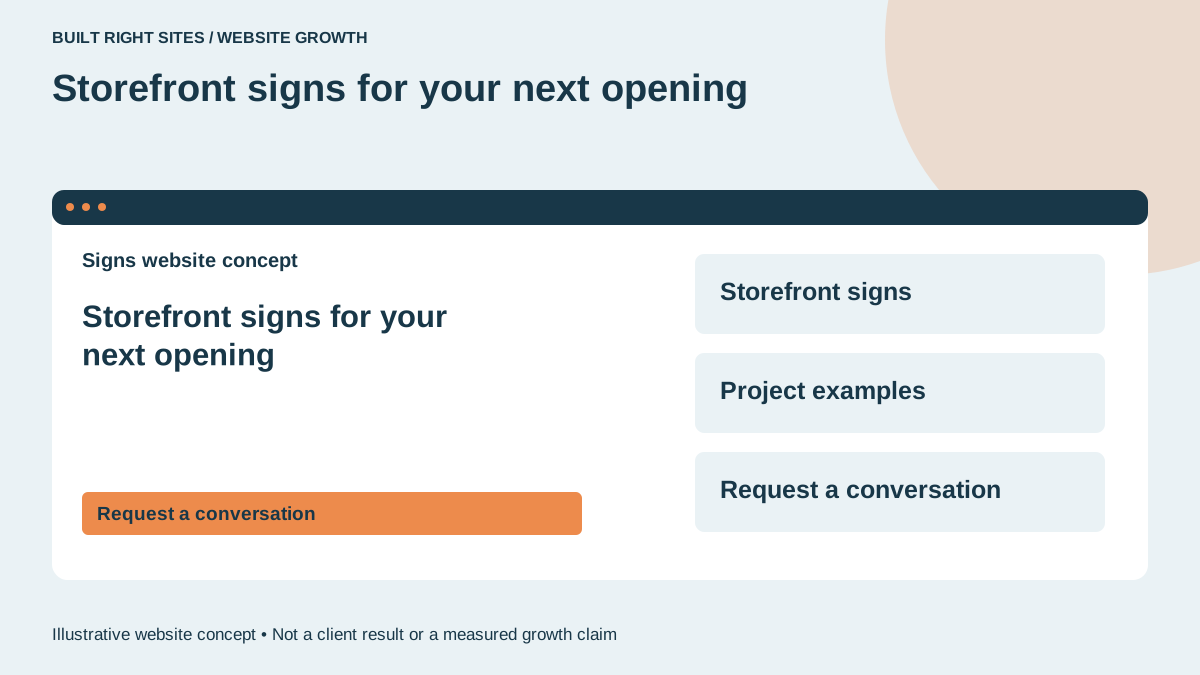
If the site says “Storefront signs for your next opening,” then shows project examples and a clear request for a conversation, the buyer can evaluate you faster. That does not create demand out of thin air, but it can turn a vague recommendation into a project-specific inquiry because the visitor sees a match between their need and your service.
Explore websites for signs businesses for an example of how this can work on a site.
What a useful sign website should explain
The most helpful pages answer practical questions a local buyer already has. What kinds of signs do you build? What businesses do you usually work with? Do you handle design, fabrication, installation, or only certain parts of the job? Even simple clarity can reduce back-and-forth before the first call.
Good copy does not need to sound technical. It needs to sound specific. A restaurant owner looking for new channel letters, for example, wants to know whether you understand storefront visibility, code considerations, and project coordination. A short explanation of your process and a few relevant project photos can do more than a gallery full of unrelated work.
For the next part of this process, read Help more customers find your sign shop.
Where search helps and where it stops
Search can help people find you when they are already looking for a sign business near them or for a particular type of project. The useful starting point is content for your intended customers. That means your pages should clearly describe services, locations served, and the kind of work you actually want inquiries about.
The limit matters too. A better website does not promise a flood of new jobs, and it does not replace reputation or sales conversations. It simply makes it easier for a motivated prospect to confirm, “Yes, this shop handles what I need,” before they move on to contact form, call, or quote request.
Why a homepage concept can help before you commit
Many owners hesitate because they know their current site is weak, but they are not sure what the replacement should look like. A homepage concept can make the idea more concrete before you decide to pay for a full build. You can see whether the structure feels right for your services, your customer type, and the way you want people to inquire.
For a sign business, that might mean a homepage centered on storefront signs instead of a generic company overview. Built Right Sites offers business websites and a homepage concept before deciding to pay, which can be useful if you want to see a direction first and then decide whether it reflects your services well. The point is not to overpromise; it is to make the next version of your site easier to evaluate.
If your sign company already gets recommendations, a new website can help those referrals become real conversations by showing the right work, speaking to the right buyer, and making the next step obvious. That is often the difference between being remembered and being chosen.
Related articles
See how your next website could work
A clear site gives interested customers a useful next step. Explore a homepage for your business, then decide whether it fits.
See my free homepageSources and further reading
- Google: People-first content — Prioritize useful content for intended readers.
Sources checked October 18, 2026. The examples and practical recommendations are our editorial guidance. AI-assisted drafting; reviewed before publication.