When a post gets attention, the next question is practical
A lot of sign shop owners see the same pattern: someone spots a dimensional lettering post, sends a quick message, and then asks for the basics. Do you serve their area? What kinds of signs do you make? Can you handle installation? Instagram is useful for getting noticed, but it is not always the easiest place to answer those questions clearly.
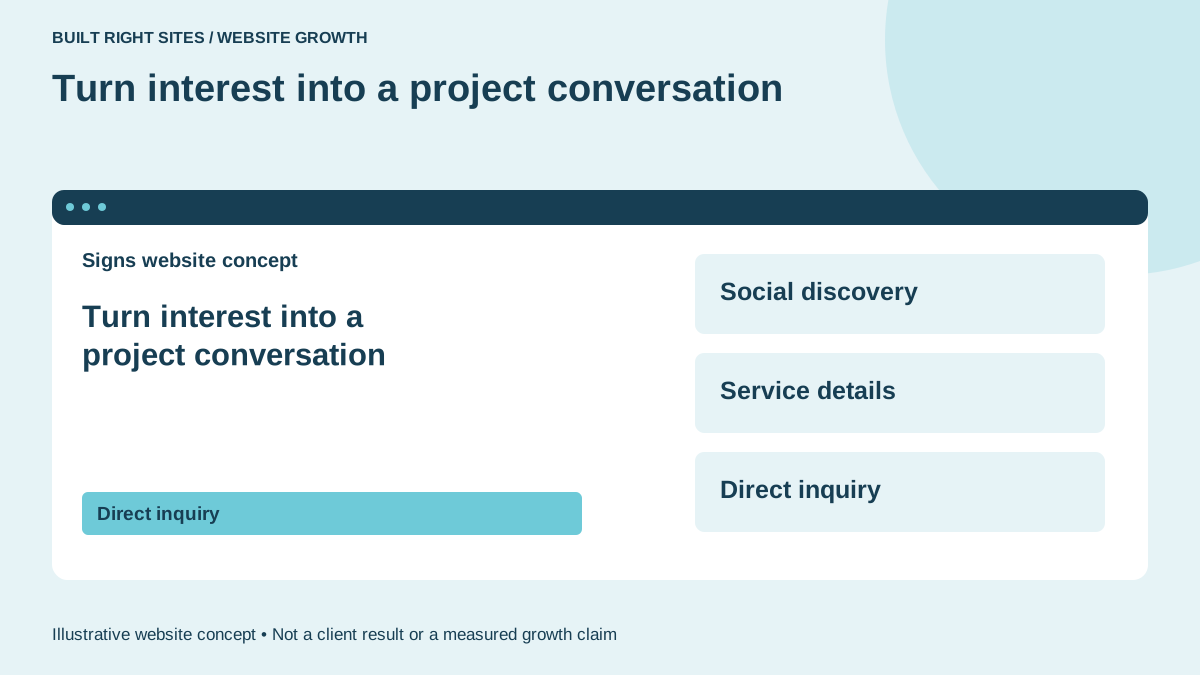
A website steps in as the place where interest becomes a real conversation. Instead of asking prospects to piece together answers from a feed, you can show service areas, project types, materials, and the kind of customers you work with. That matters because many buyers are not ready to DM first; they want a quick way to confirm that your shop fits their job before they reach out.
A hypothetical buyer journey from scroll to inquiry
Imagine a property manager scrolling late at night and seeing your post about lobby signs. The image catches their eye, but the decision does not happen on the image alone. They want to know whether you handle multi-site work, whether you install locally, and how they can send over dimensions or a rough idea. If those details are easy to find on a website, the next step feels simple instead of risky.
Now compare two versions of the same experience. In the first, the buyer keeps asking questions through comments and direct messages, then waits for back-and-forth replies. In the second, the buyer visits your site, reads a short service overview, finds a contact form, and sends a note that says, “We need new exterior lettering for our office in town.” That second path is not magic; it just removes friction at the point where interest is already there.
Explore websites for signs businesses for an example of how this can work on a site.
Why a homepage should explain more than your feed can
A good sign shop homepage is not a photo gallery copycat. It should quickly explain what you make, who you help, and where you work. That can include storefront signs, vehicle graphics, banners, dimensional lettering, and installation support if that is part of your business. It can also answer the questions people usually hesitate to ask out loud, like minimum project size, turnaround expectations, and whether you work with local businesses, contractors, or property owners.
This is also where search discovery fits in a limited but useful way. Good page experience does not guarantee rankings. Still, a clear site gives people something to find when they search for your shop name, your service area, or the type of sign they need. The goal is not to promise traffic; it is to make sure the people already looking for a sign company can understand you fast.
For the next part of this process, read Build a business beyond Facebook.
Instagram and a website do different jobs
It helps to think of Instagram as the showroom window and the website as the front desk. The social post can spark interest with a finished project, a before-and-after install, or a close-up of materials. The website then provides the details that make the project feel doable for the buyer. Each channel has a role, but they are not interchangeable.
For a sign shop owner, that difference matters when the business is trying to grow beyond casual inquiries. A feed can show style and craft, but a site can organize your work into service pages, location details, and a contact path that does not depend on someone scrolling back through old posts. If a visitor is comparing three shops, the one with clear service information often feels easier to contact.
What to expect from a website before you build one
A website can support your sign business, but it will not fix every sales problem. If your photos are unclear, your service area is vague, or you never respond to inquiries quickly, a site will not erase those issues. It also will not create demand on its own. What it can do is make sure that when interest appears, there is a place for that interest to land.
That is why the smartest reason to build is usually simple: you want a stable destination that reflects your services, not just your latest post. If you are considering a new site, a homepage concept that shows how your sign shop presents services and inquiries can help you picture the change before you commit. For many owners, that is the missing step between social attention and a real project conversation.
If Instagram is already working as a first touch, a website can make the next step easier by answering practical questions and helping the right buyers contact you with confidence. It is not a guarantee of more work, but for a sign shop that wants clearer service details and a stronger path from curiosity to inquiry, it can be the missing piece.
Related articles
See how your next website could work
A clear site gives interested customers a useful next step. Explore a homepage for your business, then decide whether it fits.
See my free homepageSources and further reading
- Google: Page experience — Good page experience does not guarantee rankings.
Sources checked October 18, 2026. The examples and practical recommendations are our editorial guidance. AI-assisted drafting; reviewed before publication.