What a searcher is usually trying to solve
A person searching for pressure washing is rarely just browsing. One visitor may want a driveway cleaned before guests arrive, while another may be looking for commercial walkway cleaning after noticing buildup near an entrance. Those two people may use similar words, but they care about different work scopes, timing, and property types.
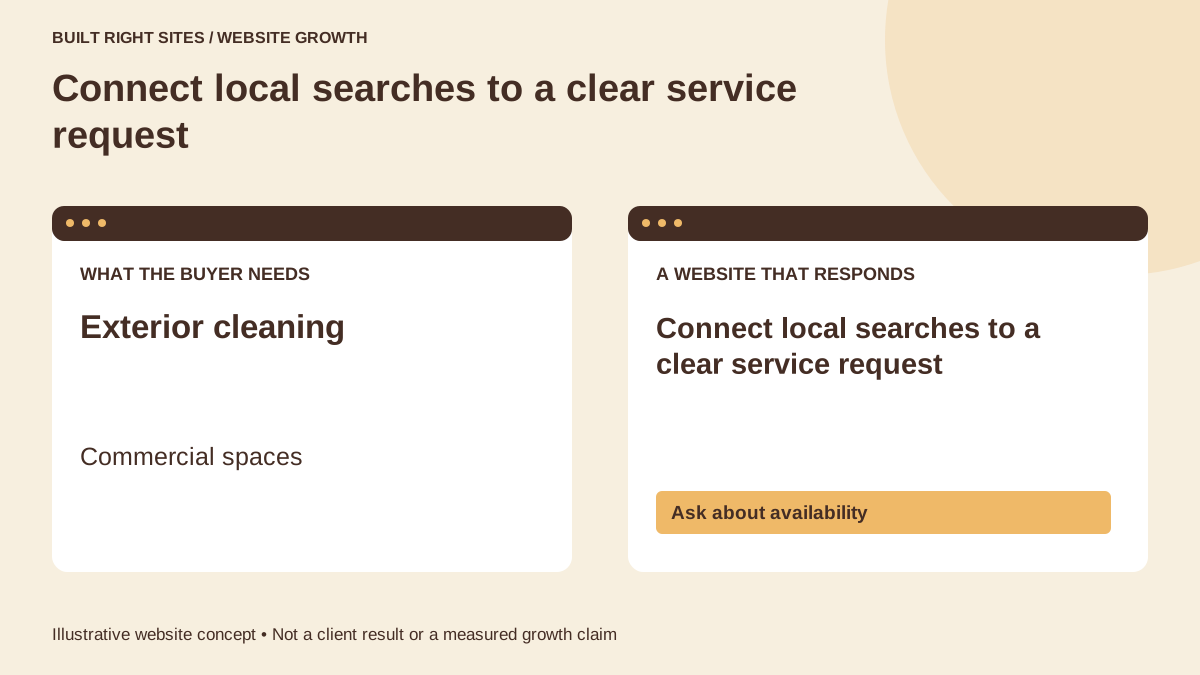
A useful website makes those differences easy to spot. If the homepage quickly shows residential exteriors, commercial surfaces, and the service area, the visitor does not have to guess whether you handle their request. That clarity can make the next step feel simpler: asking about availability instead of starting over on another site.
The difference between a vague site and a booking-ready one
A vague site says little more than “pressure washing services available.” A booking-ready site helps the visitor understand what kind of request they can submit. It can separate home exterior cleaning from commercial walkway work, show the towns or neighborhoods served, and give a short form that asks for the property type and surface involved.
Hypothetical example: a homeowner lands on a page that says “house exterior, deck, driveway, and fence cleaning” and sees a request form with the question, “What do you need cleaned?” That person is more likely to describe the project clearly. Compare that with a page that only offers a phone number and a generic contact button; the lead may arrive with too little detail to qualify the job quickly.
Explore websites for pressure washing businesses for an example of how this can work on a site.
Why service-area wording matters more than fancy copy
For local services, the right words matter because people want to know whether you actually work where they live or manage property. A website that names your city, nearby communities, and the kinds of properties you serve can reduce back-and-forth. It also helps a visitor decide whether to keep reading or move on.
That does not mean stuffing every page with place names. It means writing in the same way your customers talk: residential exterior washing, commercial entryway cleaning, parking lot edges, storefront sidewalks, and similar phrases. Search discovery can help people find you, and sitemaps aid discovery, without assuring indexing. Even so, the site still has to answer the real question fast: “Can this business handle my job in my area?”
For the next part of this process, read Make garage door requests easier.
A realistic before-and-after buyer journey
Before: a property manager searches for walkway cleaning, opens a site, and still cannot tell whether the company handles commercial properties or only houses. The page has broad claims, but no service details, no service area, and no clear next step. The manager leaves to compare another company that seems more specific.
After: that same manager lands on a homepage with separate paths for home exteriors and commercial spaces, a short explanation of the areas served, and a simple request form. The manager chooses the commercial option, adds the property address, and notes that the job is for a storefront walkway. The website has not sold the service; it has just made the request easier to start.
What a new website can do, and what it cannot
A good pressure washing website can improve clarity, reduce hesitation, and help more visitors send the right kind of request. It can also make your business look more organized when someone checks you out after seeing your name in search results or through a referral. That matters because many buyers are not ready to book immediately; they are deciding whether to ask for more information.
At the same time, a website cannot promise more jobs, more rankings, or more appointments on its own. It cannot replace fair pricing, quick replies, or good service communication. If you are thinking about a site that reflects your services and the areas you actually cover, Built Right Sites can help you consider a homepage concept before deciding to pay.
The best pressure washing websites do one practical job well: they help the right visitor understand whether you fit the work, the property, and the location. When that happens, search traffic is more likely to become a clear inquiry instead of a confused bounce.
Related articles
See how your next website could work
A clear site gives interested customers a useful next step. Explore a homepage for your business, then decide whether it fits.
See my free homepageSources and further reading
- Google: Sitemaps — Sitemaps aid discovery, not guaranteed indexing.
Sources checked October 18, 2026. The examples and practical recommendations are our editorial guidance. AI-assisted drafting; reviewed before publication.