The homeowner who is not ready to choose
A lot of roofing leads begin with uncertainty, not a decision. A visitor may know there is a leak, missing shingles, or an old roof, but they do not know whether the answer is a repair or a replacement. If your site forces that person into one generic contact form, they may leave before they ever describe the problem.
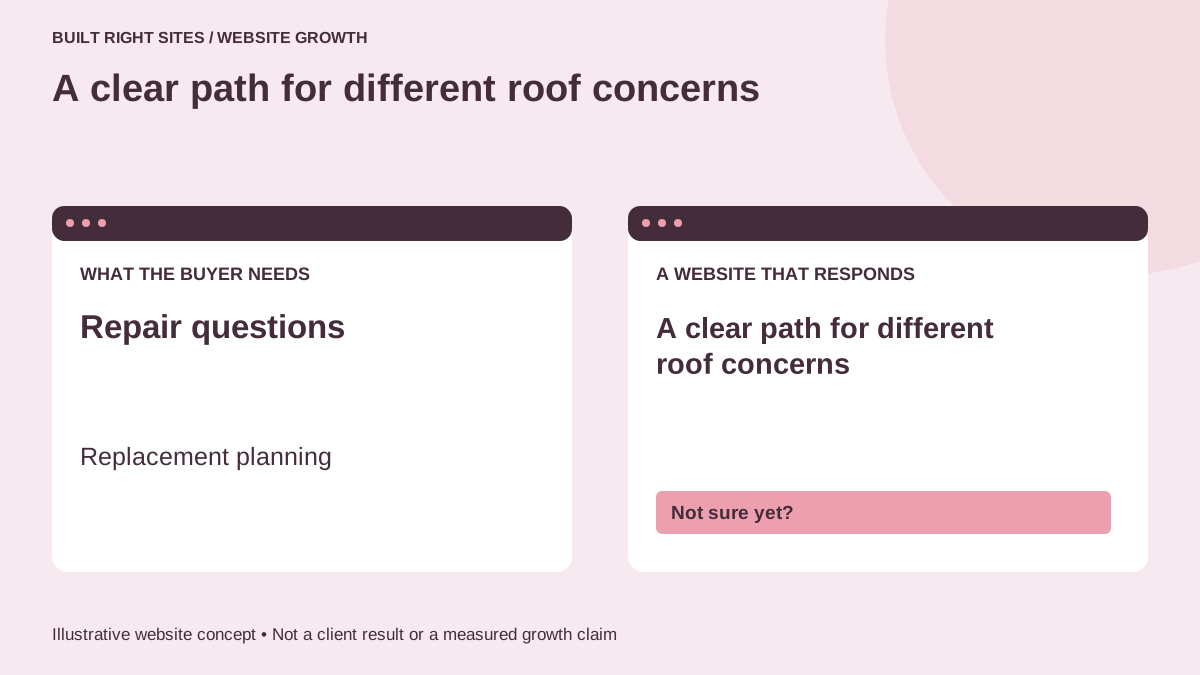
A better homepage can acknowledge that uncertainty immediately. Instead of making the visitor choose a technical path too early, the site can offer a simple fork: repair questions, replacement planning, and not sure yet. That kind of structure is useful because it matches how people actually shop when they are concerned about their home.
Why one roof page usually feels too vague
Many roofing websites describe services in broad terms, then bury the details in a single services page. That can work for a company name, but it does not always help a homeowner decide what to do next. A person who wants a quick fix may not want to read the same language as someone preparing for a full roof replacement.
Think of the difference between these two hypothetical versions of inquiry copy. Before: We handle all roofing needs. After: Not sure whether your roof needs a repair or replacement? Send a few details and ask for an assessment. The second version does not diagnose the roof. It simply gives the visitor a safer, clearer way to start.
Explore websites for roofing businesses for an example of how this can work on a site.
How separate pages guide the right conversation
Separate pages can do more than organize content. They can set expectations. A repair page can explain the kinds of concerns homeowners usually ask about in plain language, while a replacement page can focus on planning, timing, and what a larger project conversation may involve. Each page speaks to a different stage of buying, so the reader feels understood faster.
This also helps your office get better inquiries. If someone lands on the repair page, they can send a short note about a leak, storm damage, or a small section of trouble. If they land on the replacement page, they can ask about a roof that is aging or nearing the point where a bigger decision may make sense. The website does not decide the job for them; it helps them describe the problem more clearly.
For the next part of this process, read Help roofing searchers become customers.
Where search discovery fits, and what it cannot do
For local roofing businesses, search discovery matters because people often start with a search when they need help. SEO helps search engines understand content. That does not mean a site will automatically bring in steady leads, but it does mean your pages need clear topics, clear headings, and language that matches what homeowners are trying to ask.
This is where a clean page structure matters. A visitor searching for one kind of concern should not feel like they have arrived at the wrong place. The page title, opening paragraph, and inquiry prompt should all reinforce the same theme. Still, a website has limits: it cannot replace reputation, response time, or a real conversation with the homeowner. It can only make that first conversation easier to start.
A simple redesign decision for a roofing owner
If your current site treats every roofing lead the same, a redesign can make the business easier to understand. One homepage concept might start with a short reassurance, then send visitors toward the page that fits their stage: repair, replacement, or not sure yet. That is a practical business decision, not a design flourish. It reduces confusion and helps the right person move forward.
Hypothetically, imagine a homeowner with an aging roof who is unsure whether to call now or wait. They land on a site that names both possibilities, reads calmly, and offers a short assessment request instead of a hard sell. They do not need to diagnose the roof themselves. They only need a path that makes contacting the company feel manageable. If you are considering a website that reflects your roofing services clearly, a homepage concept can be a smart place to start before you decide to pay.
A roofing website works best when it respects uncertainty. Separate pages for repair and replacement help visitors find themselves faster, ask better questions, and move toward a conversation without feeling pushed into the wrong choice.
Related articles
See how your next website could work
A clear site gives interested customers a useful next step. Explore a homepage for your business, then decide whether it fits.
See my free homepageSources and further reading
- Google: SEO Starter Guide — SEO helps search engines understand content.
Sources checked October 18, 2026. The examples and practical recommendations are our editorial guidance. AI-assisted drafting; reviewed before publication.