The searcher who starts with a small leak
Many roofing leads begin with a repair-minded search. A homeowner notices a stain on the ceiling, searches for help, and wants to know whether the issue is a minor fix or a bigger problem. If your website only says “roofing services,” that person may leave without understanding whether you handle leak detection, storm damage, or emergency repairs.
A stronger site gives that visitor a simple path. It should explain the kinds of problems you solve, show the local areas you serve, and make it easy to request an inspection without forcing the homeowner to guess which form to use.
Why replacement pages need different wording
Replacement searches come from a different mindset. Someone comparing repair versus replacement is often trying to understand cost, timing, and whether their roof has reached the point where patching is no longer enough. That is why a roof replacement page should not read like a general services page.
A useful replacement page uses plain language: what signs may point to replacement, what materials you work with, and what happens during an inspection. One hypothetical example: a homeowner lands on your site after searching “roof replacement near me.” The page says you inspect the roof, explain the options, and outline the next step in a calm way. That can reduce hesitation before the phone call or form submission.
Explore websites for roofing businesses for an example of how this can work on a site.
Local proof matters more than broad claims
For roofing, local evidence often helps more than vague marketing language. People want to know whether you work in their city, whether you understand local weather patterns, and whether your business is set up for nearby service calls. A website can support that by naming service areas, showing completed project types, and describing the neighborhoods or towns you actually cover.
It is also where SEO discovery fits. Search engines can surface useful pages for local roof searches, but ranking alone does not create leads. The page still has to answer the question a homeowner brought with them. Google says to prioritize useful content for intended readers.
For the next part of this process, read Make roofing service areas clear.
A simple journey from search to inspection request
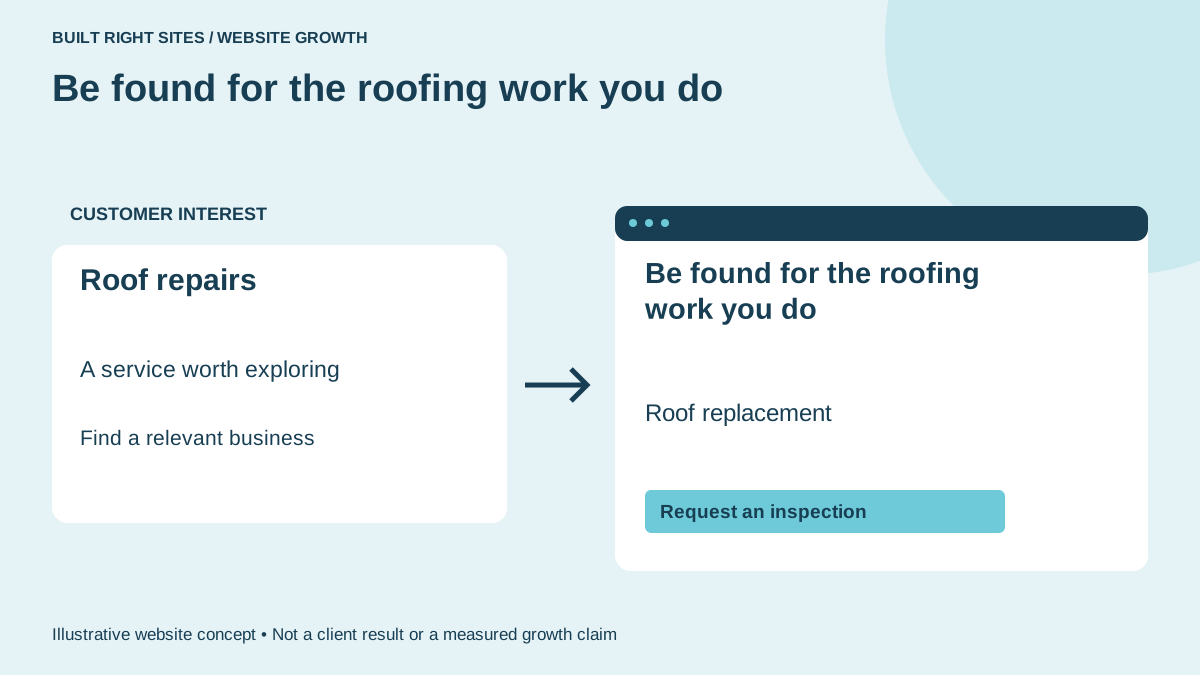
Think about a common before-and-after path. Before: a homeowner searches for repair help, lands on a generic homepage, sees little detail, and clicks away. After: the same homeowner lands on a site with separate repair and replacement pages, sees a clear inspection request button, and gets enough confidence to reach out.
That journey does not require fancy design. It requires the right order. First, confirm the service. Second, show local relevance. Third, make the next step obvious. For a roofing business, that often means one homepage that introduces the company, then focused pages that match repair, replacement, and inspection intent.
Choosing a site that reflects how you really work
A new website should fit the way your roofing business actually sells jobs. If most of your calls start with inspections, your site should make inspection requests obvious. If you handle both repairs and full replacements, the pages should separate those conversations instead of blending them together. That structure helps searchers self-select before they contact you.
If you are considering a website that reflects your services, Built Right Sites offers a homepage concept before you decide to pay. That can be a helpful first look at whether the layout supports the kind of local roofing inquiries you want, without pretending the site itself guarantees more leads.
A roofing website works best when it matches the searcher’s intent, whether they are looking for a repair, comparing replacement options, or asking for an inspection. The goal is not to promise results, but to make it easier for the right homeowner to understand what you do and take the next step.
Related articles
See how your next website could work
A clear site gives interested customers a useful next step. Explore a homepage for your business, then decide whether it fits.
See my free homepageSources and further reading
- Google: People-first content — Prioritize useful content for intended readers.
Sources checked October 18, 2026. The examples and practical recommendations are our editorial guidance. AI-assisted drafting; reviewed before publication.