When a homeowner lands on your site first
A roofing lead usually starts with a problem, not a brand. A storm-damaged homeowner may search from a phone, skim two results, and decide in seconds whether your company looks like the right fit. If the page feels vague, outdated, or buried in menu clutter, that visitor may leave before reading about service areas, roof types, or what happens next.
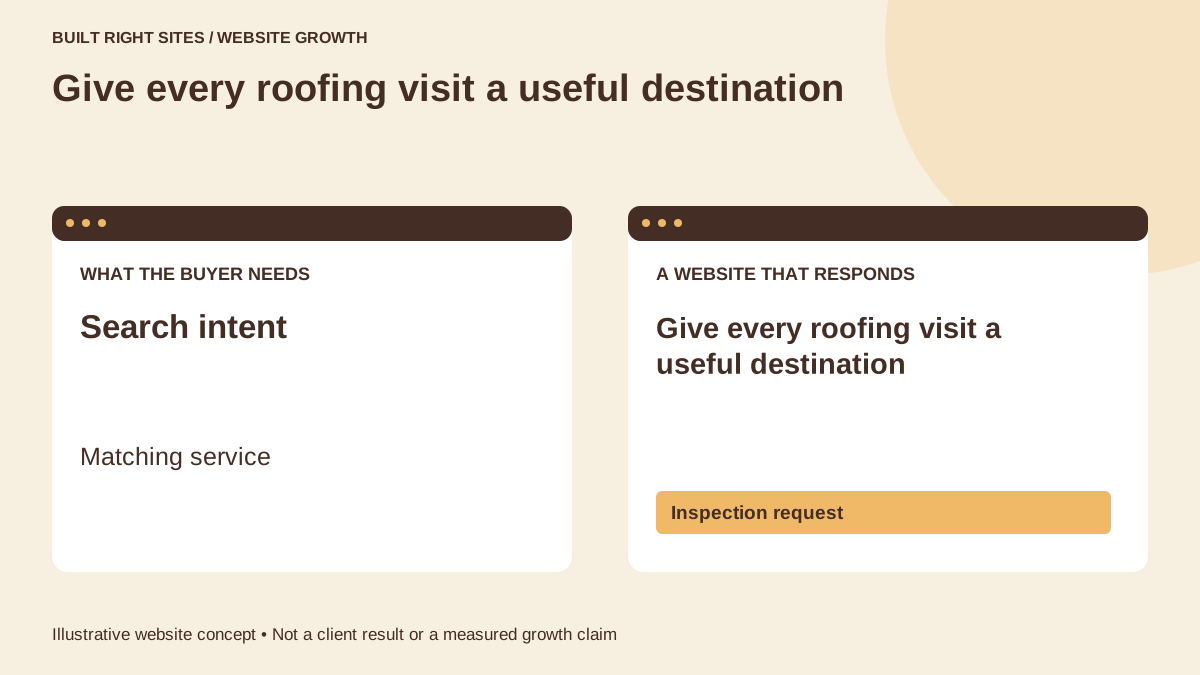
The website’s job is to answer the basic questions fast: Do you handle this kind of roof? Where do you work? How does someone ask for an inspection? That is true whether the visit comes from search results, a paid placement, or a referral link. The visitor is comparing you against the next tab, so the page should reduce uncertainty instead of adding it.
How search discovery and paid placement differ
Organic discovery and paid placement can both send people to the same homepage or a focused service page, but they arrive with different levels of intent. Search visitors often want a local answer to a roofing need, while paid clicks can be tied to a narrower offer or seasonal message. In both cases, the page must match the phrase or promise that got the click. If the user searched for roof replacement and lands on a generic home page with no service context, the chance of contact drops quickly.
A useful way to think about it is that SEO helps people find the right page, while ads help place that page in front of them sooner. Google indexes the mobile version of content. That means your mobile layout matters when people are viewing your roofing business on a phone. But discovery alone is not enough; the page still has to explain services clearly and guide the next step without making the visitor hunt for the phone number or form.
Explore websites for roofing businesses for an example of how this can work on a site.
The homepage that answers the roof replacement question
Imagine a hypothetical buyer named Dana. A leak shows up after a rainstorm, and Dana searches roof replacement near me from a phone. One result is a page with a broad slogan, a stock photo, and no mention of roofing types or service area. Another is a site that opens with a clear statement, a short service summary, visible contact options, and a simple path to request an inspection. Dana is more likely to stay on the second site because it feels like the company understands the problem.
That same page can do double duty for search and paid traffic if it is built around one clear message: this is a roofing company serving nearby homeowners who need help with a specific issue. The homepage concept matters here because the first impression can either support or block the inquiry. Built Right Sites can create a homepage concept before you decide to pay, which is useful when you want to see whether the structure reflects your services without committing to a full build right away.
For the next part of this process, read Help roofing searchers become customers.
What to say so the page does not feel generic
A roofing website often gets weaker when it tries to say everything at once. A visitor who needs roof replacement does not want to read a paragraph about every construction service under the sun. Instead, the page should separate the most common reasons people call: leaks, missing shingles, storm damage, aging roofs, or full replacement. That kind of structure helps the visitor self-identify and decide whether to move forward.
It also helps to use language that sounds like the actual customer journey. For example, “Need an inspection after storm damage?” is clearer than “Welcome to our solutions-focused company.” The first line tells the visitor what you do and why they should care. The second line sounds polished but may not help someone in a hurry. A good roofing site keeps the wording practical, because practical wording is easier to scan on mobile and easier to trust.
Where the website helps, and where it does not
A strong website can support lead flow by making your roofing company easier to understand, easier to contact, and easier to compare against other options. It can also give search and ad traffic a better destination, which matters because those visitors often arrive with a specific need in mind. But a site does not replace the need for timely responses, clear service boundaries, or accurate information. If the page promises more than the company can deliver, the visit may turn into a dead end.
The limits are important. A better website does not guarantee more jobs, and it does not turn every visitor into a quote request. What it can do is remove avoidable friction so the right prospects have a better chance to reach you. If you are considering a website that reflects your roofing services, the safest next step is to review how the homepage would present the business before you build the rest.
For roofing owners weighing SEO or paid ads, the real question is whether the website gives each visitor a clear, local, service-specific destination. If it does, both discovery and paid placement have a better place to land; if it does not, neither channel has much to work with.
Related articles
See how your next website could work
A clear site gives interested customers a useful next step. Explore a homepage for your business, then decide whether it fits.
See my free homepageSources and further reading
- Google: Mobile-first indexing — Google indexes the mobile version of content.
Sources checked October 18, 2026. The examples and practical recommendations are our editorial guidance. AI-assisted drafting; reviewed before publication.