When the website no longer matches the shop you run
A lot of sign businesses start with a simple site that was “good enough” when the shop mainly handled banners, yard signs, or basic one-off requests. Over time, the business changes. You add exterior signage, lobby signs, vehicle graphics, or full storefront packages, but the site still puts temporary products front and center. That gap matters because people often judge fit in seconds, especially when they are comparing vendors for a visible project.
A redesign becomes worth thinking about when the services you want most are buried behind the services you want least. For example, a homepage that leads with “event banners” and a gallery of trade show pop-ups may not help a property manager looking for permanent building signage. The issue is not that those items should disappear; it is that the site should show the right mix in the right order.
Repairing content versus starting over
Not every outdated sign shop site needs a full rebuild. If the structure still works, the pages load well enough, and the service pages are basically accurate, sometimes the better move is to repair the content: rewrite the homepage, tighten the service menu, add stronger photos, and make the calls to action clearer. That approach is often enough when the main problem is messaging, not the underlying site structure.
A rebuild makes more sense when the site’s layout itself is working against the business. Maybe the navigation makes permanent signage hard to find. Maybe the gallery is organized by project type that no longer reflects current work. Maybe the mobile experience is clumsy, and Google indexes the mobile version of content. In that case, a fresh site can organize the business around the work you actually want to win instead of patching a design that keeps sending the wrong signal.
Explore websites for signs businesses for an example of how this can work on a site.
A hypothetical buyer journey from wrong fit to better fit
Imagine a business owner in town searching for “storefront sign company” after opening a second location. They land on a sign shop site and see a homepage dominated by seasonal banners, sponsor signs, and a generic “we do it all” headline. There is a services page, but the permanent sign work is mentioned only in a single paragraph near the bottom. The owner leaves without calling, not because the shop cannot do the job, but because the site does not make that clear quickly enough.
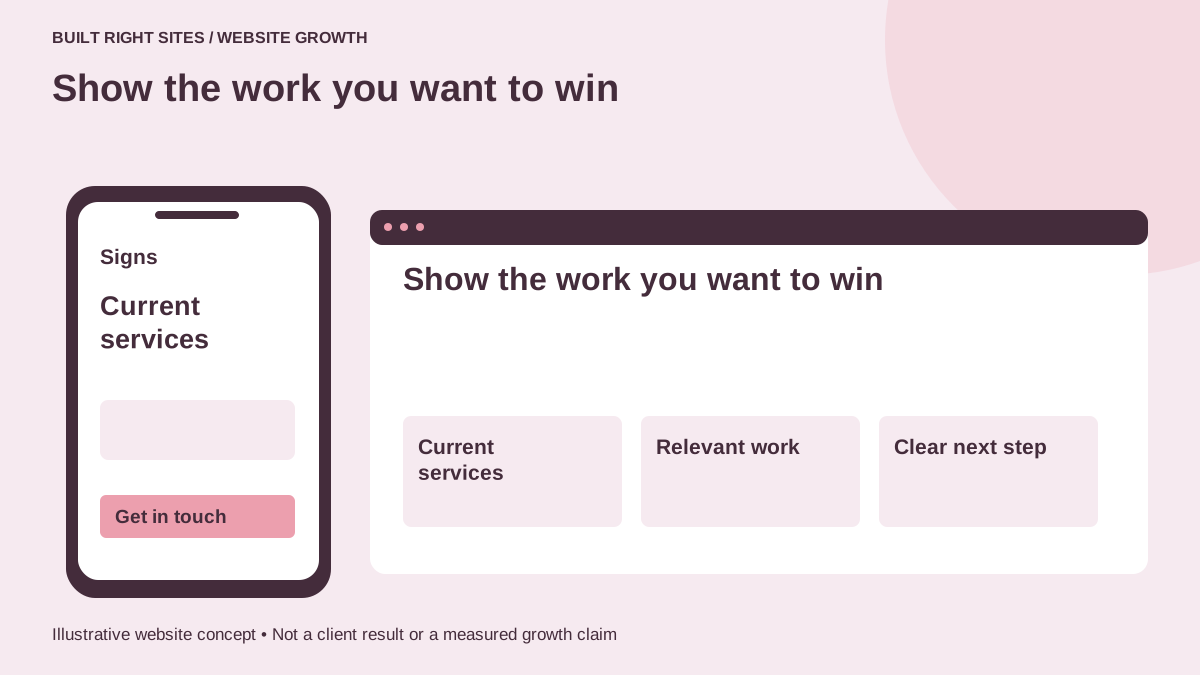
Now picture the same shop after a redesign. The homepage opens with storefront, monument, and interior sign services, followed by examples of completed work and a simple next step for requesting a quote. The banner work is still there, but it is secondary. That before-and-after contrast is the real point: the site does not create demand, but it can make the right demand easier to recognize and respond to.
For the next part of this process, read Connect better design with useful leads.
Search visibility helps when the pages are clear enough to match intent
Local discovery matters for sign shops because many buyers start with a search for a specific service or project type. A site that clearly names what you do and where you work gives searchers and search engines more useful context. Google indexes the mobile version of content, so the mobile page has to carry the same practical service information as the desktop version.
That said, SEO is not a magic switch. A redesign can improve how your services are presented for discovery, but it does not guarantee traffic or inquiries. The practical goal is simpler: make it easier for someone searching for a sign service to understand whether your shop fits the job, then give them a clean path to contact you.
Preserving useful pages during a redesign
One reason sign shop owners hesitate is fear of losing pages that already bring in the right visitors. That concern is reasonable. If your current site has useful service pages, project galleries, or location pages, a redesign should protect that value rather than wipe it out. The best plans keep what still serves the business and improve the parts that confuse visitors or hide the strongest offers.
A careful migration also helps avoid broken paths that frustrate both customers and search visibility. Old URLs, service page titles, and contact paths should be reviewed before launch so people can still reach the content they expect. Built Right Sites offers business websites and can show a homepage concept before you decide to pay, which is useful if you want to see whether the new direction finally reflects the services near the top of your list.
If your sign shop is growing toward more permanent, higher-value projects, the question is less “do I need a new website?” and more “does the current site still represent the work I want?” When the answer is no, a redesign can be a practical next step for better clarity, better organization, and a more useful local search presence.
Related articles
See how your next website could work
A clear site gives interested customers a useful next step. Explore a homepage for your business, then decide whether it fits.
See my free homepageSources and further reading
- Google: Mobile-first indexing — Google indexes the mobile version of content.
Sources checked October 18, 2026. The examples and practical recommendations are our editorial guidance. AI-assisted drafting; reviewed before publication.