Start with the service the visitor is actually searching for
When someone types a query like stumpgrinding, they are usually not looking for arborist consulting or a full landscape overhaul. They want a direct answer: can you remove the stump, do you handle cleanup, and are you available in their part of town? A website built around those real questions can reduce confusion before the phone even rings.
A clear homepage can separate tree removal, pruning, stump work, and emergency response so each visitor sees the right path quickly. For a local buyer, that structure can mean the difference between a quick inquiry and a back-button exit. It also helps you speak plainly about service areas and job types without making every page sound the same.
Show the work without making the page feel risky
Tree service buyers often look for proof that you know what you are doing, but they do not need a dramatic sales pitch. Safe, current photos of your crew, equipment, and completed jobs can help visitors picture the kind of work you handle. The key is to keep the visuals honest and relevant, not padded with stock images that look nothing like your business.
A homeowner comparing two companies may notice small details: whether the site shows cleanup after removal, whether the text explains stump grinding separately from cutting down a tree, and whether the company appears local. Those signals can build confidence, but only when the wording matches the actual services offered. If you do not provide a service, the website should not imply that you do.
Explore websites for tree service businesses for an example of how this can work on a site.
Make local discovery easier to connect to the right page
Local discovery matters because many people search with a location in mind, even if they do not type a full city name every time. Google says good page experience does not guarantee rankings. That means a usable site is helpful, but it is not a magic switch. Your site still needs pages that clearly name the service, the area, and the type of request you want to receive.
For example, a visitor searching for stump removal in one neighborhood should land on a page that answers that need directly instead of a broad homepage full of unrelated services. The practical goal is not to trick search engines; it is to make it easy for the right person to confirm they found the right company. That is where local SEO and website structure meet in a simple, useful way.
For the next part of this process, read Make roofing service areas clear.
A realistic before-and-after buyer journey
Before: a property manager lands on a page that says only “complete tree care” and sees a long list of services with no distinction between pruning, removal, and stump work. They are not sure whether the company handles the exact job, whether the crew serves commercial properties, or whether they should call at all. They leave and keep looking.
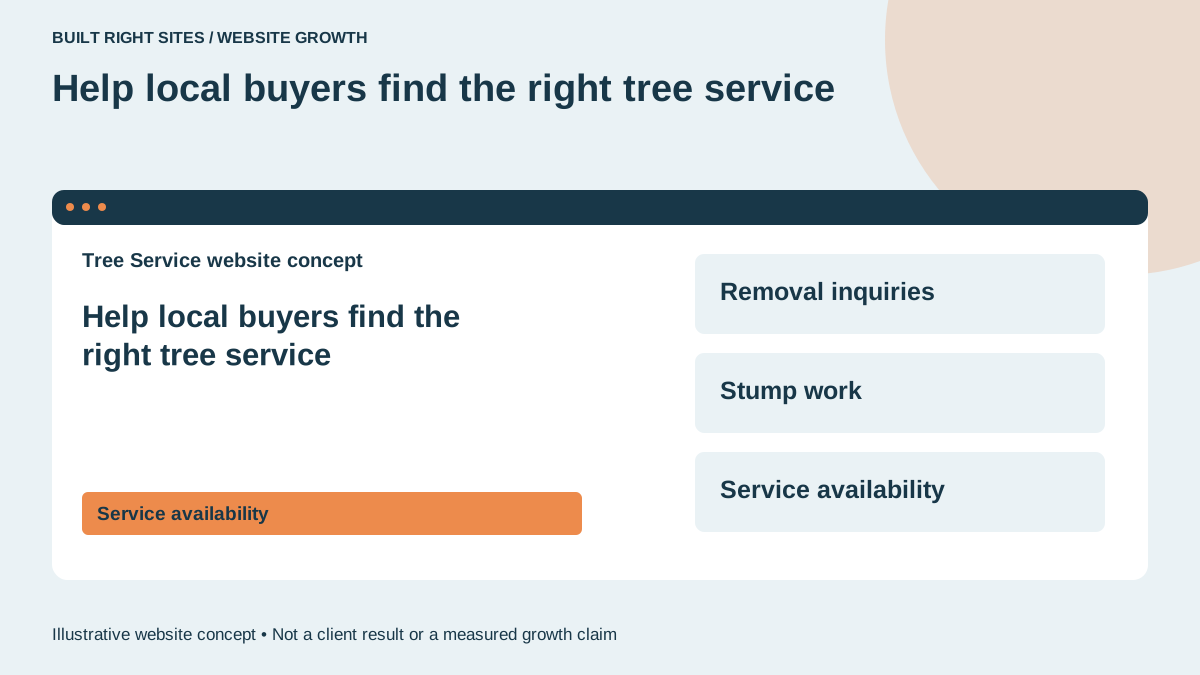
After: the same visitor opens a site with a homepage that offers three clear paths: removal inquiries, stump work, and service availability. The page explains what each service includes, shows a few relevant project photos, and invites the visitor to request the appropriate kind of estimate. That small change can make the next step feel simpler, especially when the buyer is comparing several local companies at once.
Why a new website can help without pretending to solve everything
A better website can make your services easier to understand, but it cannot fix poor response time, unclear pricing habits, or a service area that is too vague to be useful. It also cannot guarantee that every visitor becomes a lead. What it can do is remove friction by answering common questions before they turn into confusion.
For a tree service owner thinking about a new site, the practical question is whether the current homepage reflects how customers actually buy. If the answer is no, a cleaner structure may be worth considering, especially one that reflects your actual services and gives visitors a clear next step. Built Right Sites offers business websites and can share a homepage concept before you decide to pay, which can help you picture how the service pages might fit together before moving forward.
A tree service website works best when it helps local buyers identify the right job fast, whether they need removal, pruning, or stump work. If your current site blurs those services together, a clearer structure can make your business easier to contact and easier to trust, while still staying grounded in what you actually do.
Related articles
See how your next website could work
A clear site gives interested customers a useful next step. Explore a homepage for your business, then decide whether it fits.
See my free homepageSources and further reading
- Google: Page experience — Good page experience does not guarantee rankings.
Sources checked October 18, 2026. The examples and practical recommendations are our editorial guidance. AI-assisted drafting; reviewed before publication.