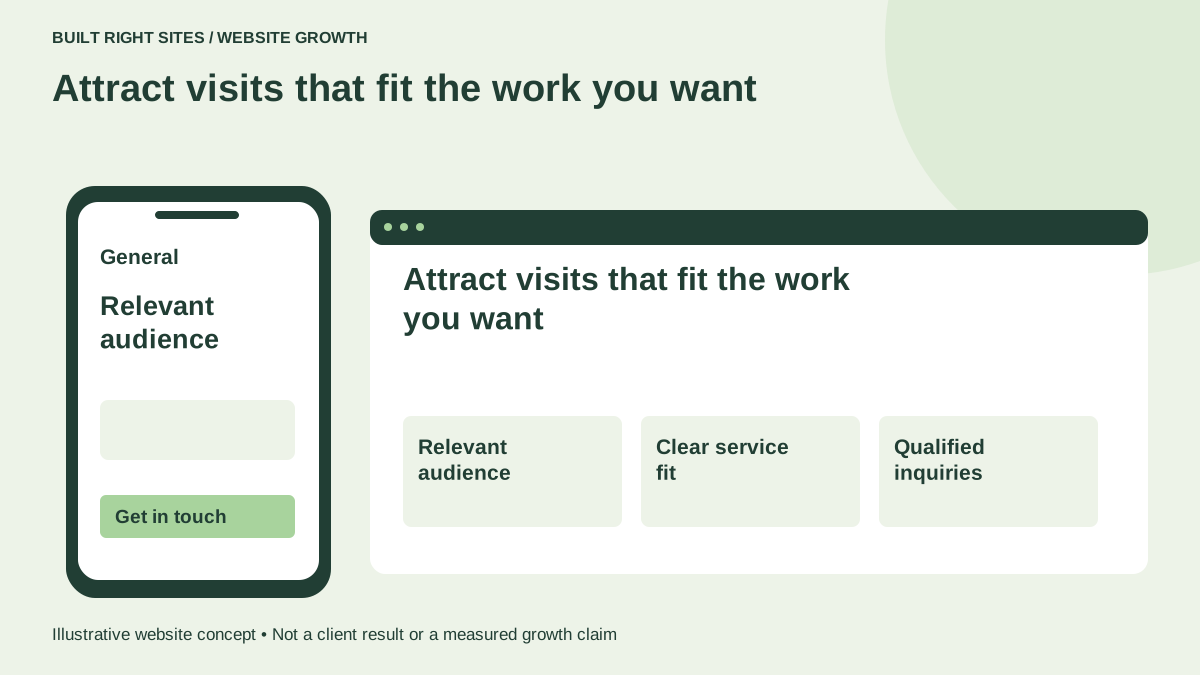
Start with the work you actually want
If you run a service business, the right website goal depends on the jobs you want more of. A contractor, sign shop, roofer, or other local operator may not need every kind of visitor. The better outcome is a site that draws people whose needs match the services, timing, and scope you can realistically handle.
A hypothetical example makes the difference clear. One owner gets plenty of clicks from people browsing DIY ideas, but those visitors mostly leave after reading. Another owner gets fewer visits, yet those visitors are looking for a custom quote, know what they need, and are ready to contact someone. The second site may look less busy, but it can be far more useful for day-to-day business growth.
Why traffic alone can feel busy but thin
High traffic can be flattering, but it can also blur the real picture. If people arrive and do not see the right service area, the right type of work, or a clear next step, the site may be attracting curiosity instead of inquiries. That is especially true for businesses that serve a specific region or a specific kind of customer.
This is where search visibility matters in a practical way. Search Console reports search visibility, which helps you see whether your pages are getting found at all. But visibility by itself does not mean the right people are calling, filling out forms, or requesting estimates. A site can be found for broad terms and still miss the buyer who is ready to hire.
Explore Built Right Sites website examples for an example of how this can work on a site.
What better leads usually look like
Better leads are usually not about volume; they are about fit. A qualified inquiry is one that matches the services you offer, the area you serve, and the kind of project you want to take on. For a local business owner, that can mean fewer casual questions and more requests that are easier to estimate, schedule, and close.
Hypothetical before-and-after wording can help shape that difference. Before: “We do everything for everyone.” After: “We help local businesses and property owners with custom sign projects, installed by a team that handles the full process.” That kind of message can reduce confusion and make it easier for the right visitor to recognize themselves on the page.
For the next part of this process, read Turn Google visibility into useful leads.
How a website helps sort the right from the wrong fit
A good website does not create demand out of nowhere, and it cannot fix every sales problem. What it can do is make your business easier to understand before a person calls. Clear service pages, service-area language, project photos, and a simple contact path all help visitors decide whether they are a match.
It also helps if the site answers the questions that matter most to buyers: what you do, where you work, what kind of jobs you take, and how someone can start a conversation. When those details are missing, you can still get traffic, but many visitors will leave uncertain. When they are present, you are more likely to get fewer, stronger inquiries instead of random ones.
Choosing the right goal for the new site
If you are deciding between more traffic and better leads, begin with capacity. If your calendar is open and your services are broad enough to handle a wider range of work, traffic growth may be useful. If your time is limited or your best jobs come from a specific type of customer, lead quality should usually come first.
For a business owner comparing options, this often comes down to a redesign decision: do you want a site that looks impressive to anyone, or one that clearly reflects your services and helps the right visitor move forward? That is where a homepage concept before deciding to pay can be helpful, because you can see whether the direction fits your business before moving ahead with a site that reflects your services. Results remain uncertain, but the right focus can make your website work more like a filter and less like a billboard.
For most local businesses, the smarter goal is not just more website traffic. It is better traffic that turns into clearer, more relevant inquiries, supported by a site that helps the right people understand what you do and whether you are the right fit.
Related articles
See how your next website could work
A clear site gives interested customers a useful next step. Explore a homepage for your business, then decide whether it fits.
See my free homepageSources and further reading
- Google: Search Console — Search Console reports search visibility.
Sources checked October 18, 2026. The examples and practical recommendations are our editorial guidance. AI-assisted drafting; reviewed before publication.