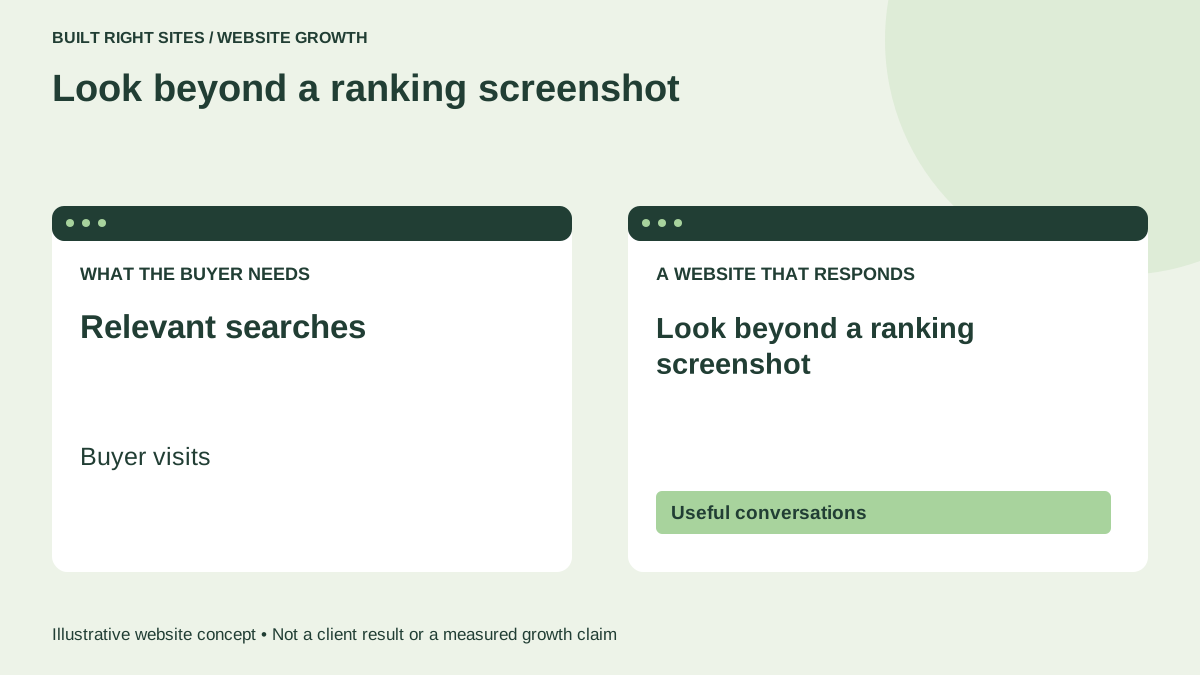
When the search result looks better than the lead flow
A lot of owners first notice the problem in a screenshot. They see their company name, a map listing, or a branded search result and assume the lead flow should follow. But a visible result is not the same thing as a motivated buyer. Someone searching your company name may already know you, while someone searching a service term may be comparing options, asking basic questions, or not ready to call yet.
Google Search Console reports search visibility. That is useful, but it does not tell you whether the searcher was a buyer, a job seeker, or someone researching a DIY fix. That is why a business can appear to be “ranking” and still feel invisible where it matters: in actual inquiries.
What a buyer is really looking for after the click
Imagine a hypothetical roofing customer who searches your business name after seeing a truck in town. They land on your site and spend ten seconds scanning. If they cannot quickly confirm service area, service type, and how to request an estimate, they may leave and call the next contractor. Another hypothetical visitor might be searching “roof repair near me” but only sees a generic homepage that never explains whether you handle leaks, replacements, or emergency work. In both cases, the website exists, but it does not help the buyer move forward.
A strong business website gives visitors a clear path from curiosity to contact. That can mean obvious service descriptions, a simple contact option, neighborhood or city references where appropriate, and proof points that answer basic trust questions. For a sign shop, that might mean showing the difference between channel letters, vehicle graphics, and storefront signs. For a roofer, it might mean separating repair, replacement, and inspection pages so people can find themselves quickly.
Explore Built Right Sites website examples for an example of how this can work on a site.
Why branded traffic can mislead owners
One common misconception is that if branded searches are strong, lead generation should be strong too. Branded traffic is often easier to win because people already know the business name. It can make dashboards feel healthy even when new-customer interest is thin. That is especially common when the business name, not the service itself, is what people type into Google.
The more useful question is whether the site turns a visit into a useful conversation. A person can land on your homepage, find your phone number, and still hesitate if the page feels vague or outdated. A site that reflects your actual services near the top can help, but it cannot force a call. It can only remove friction for the people who are already interested enough to keep reading.
For the next part of this process, read What to expect from SEO after launch.
A better homepage can separate buyers from browsers
Consider a hypothetical before-and-after on a sign company site. Before: “Welcome to our company” with a few generic photos and a contact form buried at the bottom. After: a homepage that says what the shop makes, who it serves, and what kinds of sign projects it handles, followed by a short route to request a quote or preview ideas. That change does not create demand out of thin air, but it can make the business easier to understand in the moments that matter.
The same idea applies to roofing. A homeowner who is worried about a leak does not want a brand story first; they want to know if the company handles their issue and where it works. A homepage concept before paying, like the kind Built Right Sites offers, can be helpful here because it lets an owner see whether the site’s first impression actually matches the services they want to sell. That is not a promise of rankings or leads, just a way to judge whether the website content fits the buyer's decision-making path.
Where SEO fits, and where it does not
SEO matters because it helps search engines understand what your pages are about, and it can bring in people searching for relevant services. But SEO alone does not fix a weak offer page, unclear service area, or a site that makes buyers work too hard to contact you. If the wrong searches are coming in, or the right searches are landing on the wrong page, the lead quality can still be poor.
So the practical goal is not “rank everywhere.” It is to make sure the business shows up for useful searches, then gives those visitors a page worth acting on. That means clear service language, simple navigation, and a layout that speaks to actual buyers rather than everyone who might click. If you are reviewing whether it is time for a new website, start with the pages that explain your services plainly and show how a customer should respond next.
If your business ranks on Google but leads are weak, the answer is often not more visibility alone. A better website can help turn the right searches into clearer conversations, while also exposing when your traffic is mostly coming from branded curiosity instead of ready buyers.
Related articles
See how your next website could work
A clear site gives interested customers a useful next step. Explore a homepage for your business, then decide whether it fits.
See my free homepageSources and further reading
- Google: Search Console — Search Console reports search visibility.
Sources checked October 18, 2026. The examples and practical recommendations are our editorial guidance. AI-assisted drafting; reviewed before publication.