The first signs are not always leads
Right after launch, the earliest changes are often technical, not promotional. Search engines need to discover the pages, understand what each service page is about, and decide how the site fits into a search result. Google says SEO helps search engines understand content. That is a useful starting point, but it is not the same as instantly showing up for every local search.
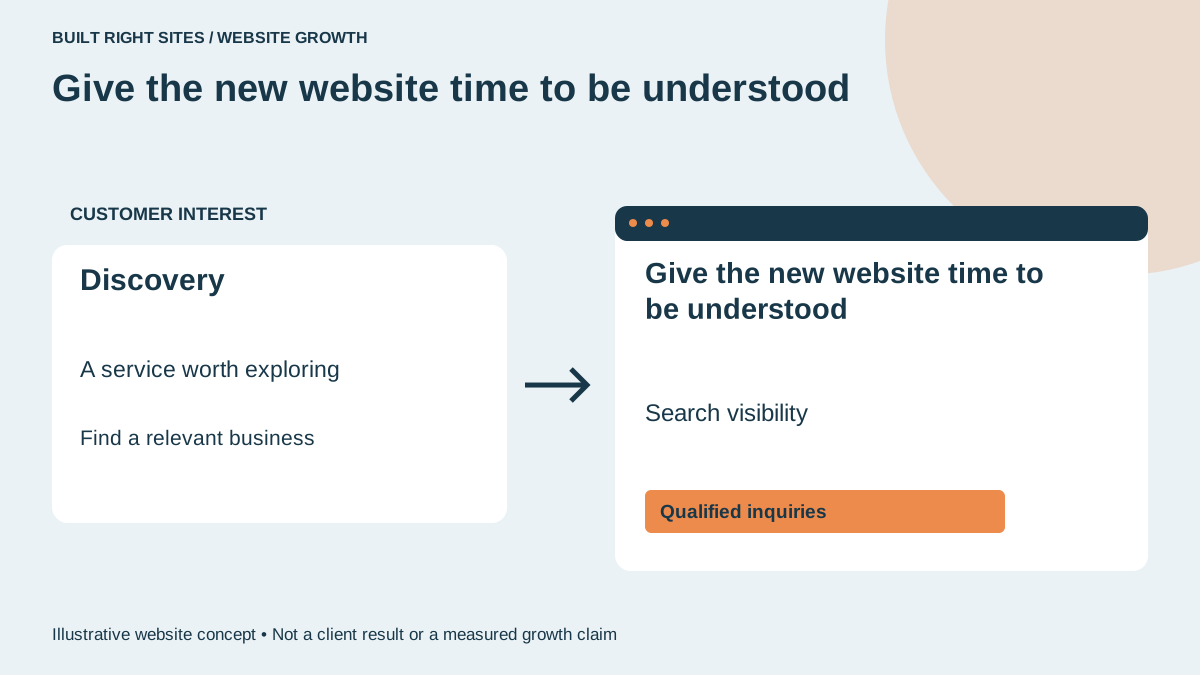
A hypothetical sign shop owner might expect the phone to ring the moment the site goes live. A more realistic early observation is that the site becomes visible to search systems first, then starts appearing for a few branded searches or specific service phrases, and only later produces qualified inquiries. That sequence matters because it keeps expectations grounded in how discovery actually works.
What a local owner can track early
In the first stretch after launch, a business owner can watch for simple signals that the site is being understood. Are the service pages loaded and readable? Do the contact details match what customers already see elsewhere? Does the homepage make it obvious who the company serves and what problems it solves? Those details help visitors, and they also help search systems interpret the site correctly.
For a roofing company, for example, a clearer site structure may not create an immediate flood of leads, but it can make it easier for a homeowner to tell the difference between roof repair, replacement, and emergency help. That clarity matters because many local searches are cautious and specific. The better the site answers those questions, the more likely it is to attract the right kind of visitor when search visibility arrives.
Explore Built Right Sites website examples for an example of how this can work on a site.
Why SEO progress is slower than a launch announcement
A common misconception is that a new website should behave like a switch being flipped. In reality, launch day is usually the beginning of the site’s adjustment period. The pages need to be crawled, then understood, then tested in different search situations before they have any meaningful chance to bring in local discovery traffic. That does not mean nothing is happening; it means the useful signs appear in stages.
For someone asking how long can seo take after launching a new website?, the safest answer is that there is no fixed timeline or promise. One owner may notice indexed pages and branded visibility before any new inquiries. Another may have to wait longer before the site shows up for the kinds of service searches that matter most. The difference often comes from how clearly the site explains the business, not from a single shortcut.
For the next part of this process, read Name searches and service searches.
A buyer journey after launch
Here is a hypothetical buyer journey that shows the difference between visibility and contact. A homeowner types a local service search, sees a few businesses, and clicks a site because the headline matches the need. On the page, the visitor checks whether the company serves the right area, whether the service is described plainly, and whether there is an easy way to ask for an estimate. If any of those pieces feel unclear, the visitor leaves and keeps comparing options.
Before the new site, the business might have had a vague homepage that said almost nothing beyond the company name. After the redesign, the homepage says what the company does, shows the main services, and gives the visitor a clear next step. That does not guarantee a lead, but it can turn a casual searcher into a more qualified contact. The website is doing its job when it helps the right person understand the offer quickly.
Choosing a website that can grow with the search journey
This is where a new website can support growth without promising more than it can deliver. A good local-business site can make service pages easier to find, help search engines interpret the business, and give prospects a cleaner path from search result to inquiry. It can also make future improvements easier because the content is organized around real services instead of a generic brochure.
If you are considering a website that reflects your services clearly and is built for local discovery, Built Right Sites offers a homepage concept before you decide to pay. That is useful for owners who want to see whether the site matches the way customers actually search and compare. The limit is still the same: a website can improve understanding and visibility, but it cannot guarantee when contacts will arrive.
For a local owner, the smartest way to judge a new website is by the sequence of progress, not by a single date. First the site becomes understandable, then it can become visible in search, and only then does it have a better chance of producing qualified inquiries.
Related articles
See how your next website could work
A clear site gives interested customers a useful next step. Explore a homepage for your business, then decide whether it fits.
See my free homepageSources and further reading
- Google: SEO Starter Guide — SEO helps search engines understand content.
Sources checked October 18, 2026. The examples and practical recommendations are our editorial guidance. AI-assisted drafting; reviewed before publication.