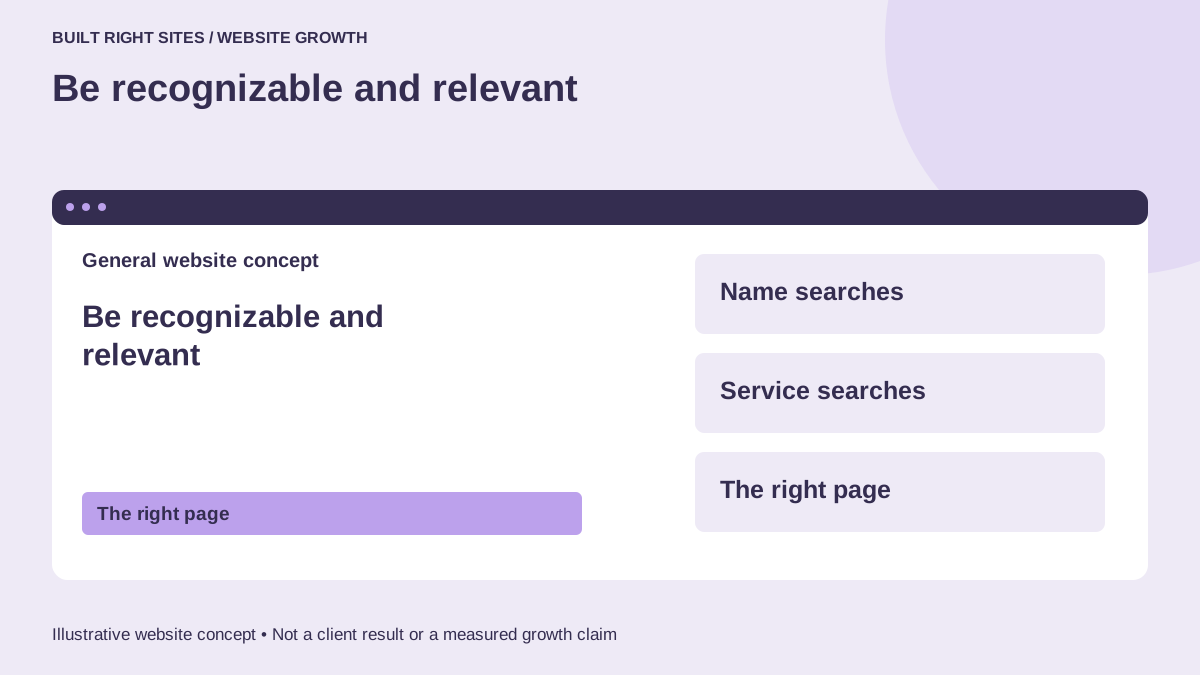
Why the search intent is not the same
A person typing your business name is usually trying to confirm details, not shop from scratch. They may want your phone number, hours, service area, or a quick way to verify they reached the right company after a referral, truck sighting, or past job.
Someone searching by service is in a different mindset. They may not know your company yet, but they do know what they need, such as storefront signs, roof repair, or another local service. That visitor needs clear clues that your business fits the problem before they ever think about calling.
What a branded search visitor needs first
For branded searches, the website should answer the fastest questions right away. A homepage or contact page that clearly shows the business name, logo, services, location, and a simple next step can reduce confusion for someone who already chose you by name.
Hypothetical example: a referral says, “Call Northstar Signs.” The owner searches the name, lands on a clean homepage, and instantly sees the phone number, a short description of services, and a page for requesting a quote. That is enough to keep the person moving without making them hunt through a generic homepage.
A strong branded page does not need to say everything. It just needs to confirm identity and make it easy for the visitor to act. For repeat customers and referral traffic, clarity matters more than flashy copy.
Explore Built Right Sites website examples for an example of how this can work on a site.
What a service search visitor looks for
Service-search visitors are comparing options, so the website has to explain what the business does in plain language. A page about storefront signs, for example, should name the service, mention the types of customers it helps, and show enough detail to separate that offering from unrelated work.
Google titles should describe pages clearly. That simple idea matters because a service page that matches the search term is easier for people to understand before they click. The page should also make the next step obvious, whether that is calling, sending a message, or browsing related services.
This is where SEO and discovery fit, but only in a limited sense. A page can be built so people searching for a service have a better chance of recognizing it as relevant; that does not guarantee rankings, and it does not replace useful page content or local credibility.
For the next part of this process, read Help more customers find your sign shop.
The mistake of making one page do everything
Many local business sites try to turn the homepage into a catch-all page for both brand searches and service searches. The result is usually a crowded page that says too little about the company and too little about the actual service to help either visitor well.
A better structure separates intent. The homepage can welcome branded visitors and point to major services, while dedicated service pages can speak directly to new buyers. That way, a person searching the business name gets reassurance, and a person searching by service gets a page that matches the need.
Imagine the after version of a site before and after a small redesign. Before: one long homepage with vague headlines and no clear service sections. After: the name is obvious, the services are listed in plain words, and each service has its own page that answers the questions a buyer is likely asking.
How this helps a new website decision
If you are building a new website, think about who is searching in each way. Referral traffic and repeat customers want recognition. New buyers want relevance. A website that handles both can make your business easier to understand without pretending every visitor is in the same stage.
For an owner considering a site that reflects their services, the practical question is not whether the homepage looks nice. It is whether a branded search visitor can confirm they found the right company, and whether a service search visitor can quickly tell what is offered and why it fits their need. Built Right Sites offers a homepage concept before you decide to pay, which can help you picture that balance before moving forward.
That approach is useful because it keeps the decision concrete. You can see whether the site feels more like a name card, a service page, or both, and whether the structure supports how people actually search for you.
Business name searches and service searches serve different buyers, so the best local websites make room for both. A clear brand page helps people who already know you, while focused service pages help new visitors understand whether you are the right fit.
Related articles
See how your next website could work
A clear site gives interested customers a useful next step. Explore a homepage for your business, then decide whether it fits.
See my free homepageSources and further reading
- Google: Title links — Titles should describe their pages clearly.
Sources checked October 18, 2026. The examples and practical recommendations are our editorial guidance. AI-assisted drafting; reviewed before publication.