What a facility manager is looking for first
A commercial roofing lead is rarely just a person filling out a form. More often, it is a facility manager, property manager, or owner who needs a fast answer to a very specific question: can this contractor handle my property type without creating disruption? That means the website has to speak to context before it speaks to price.
A strong homepage or service page can make that easier by naming the building types you work on, the kinds of access issues you can help coordinate, and the general process for getting an inspection or estimate started. If someone is trying to evaluate a warehouse, office building, or retail center, they should not have to guess whether your company is a fit.
Why separate commercial and residential proof matters
One common mistake is mixing every roofing job into one gallery. A commercial buyer may not be comforted by a row of residential shingle photos, even if the craftsmanship is excellent. They are looking for evidence that you understand larger roofs, tenant schedules, safety coordination, and the reality of keeping a property open while work is underway.
A separate commercial section lets you show the right kind of relevance without over-explaining. You can use project descriptions that identify the property type, the general challenge, and the role your team played. That does not mean promising every service or every specialty. It means making the site feel specific enough that the right visitor can say, “This looks like my kind of project.”
Explore websites for roofing businesses for an example of how this can work on a site.
How search helps people find you at the right moment
Search engine visibility matters because many commercial buyers start with a problem, not a contractor name. They might type a service plus a property type, or search for help after noticing a leak, scheduling conflict, or inspection issue. A useful website gives those searchers a page that matches their intent and clearly describes what you do.
Google says titles should describe their pages clearly. That sounds simple, but for roofing it matters a lot. A page titled for the actual service and property type is easier for a searcher to trust than a vague headline that could belong to any contractor. This is not a guarantee of rankings or leads; it is a practical way to make discovery less confusing for the right visitor.
For the next part of this process, read Help roofing searchers become customers.
A hypothetical buyer journey from confusion to contact
Imagine a warehouse owner who notices recurring leaks after a storm and needs a contractor who can work around loading dock activity. At first, they land on a generic roofing site with no commercial examples, no mention of property types, and a gallery full of suburban homes. They leave quickly because they cannot tell whether the company understands their situation.
Now imagine the same buyer landing on a site that opens with commercial roofing, shows a few relevant building examples, and explains how scheduling and access are handled. The site does not oversell. It simply answers the next question before the buyer has to ask it. That before-and-after difference is often what turns a casual browse into a call or form submission.
What a new website can do, and what it cannot
A better website can reduce friction, make your commercial work easier to understand, and help the right people contact you sooner. It can also help you avoid wasted calls from visitors who were really looking for residential repairs. For a roofing owner trying to attract more commercial work, that kind of clarity is valuable because it filters attention, not just adds more of it.
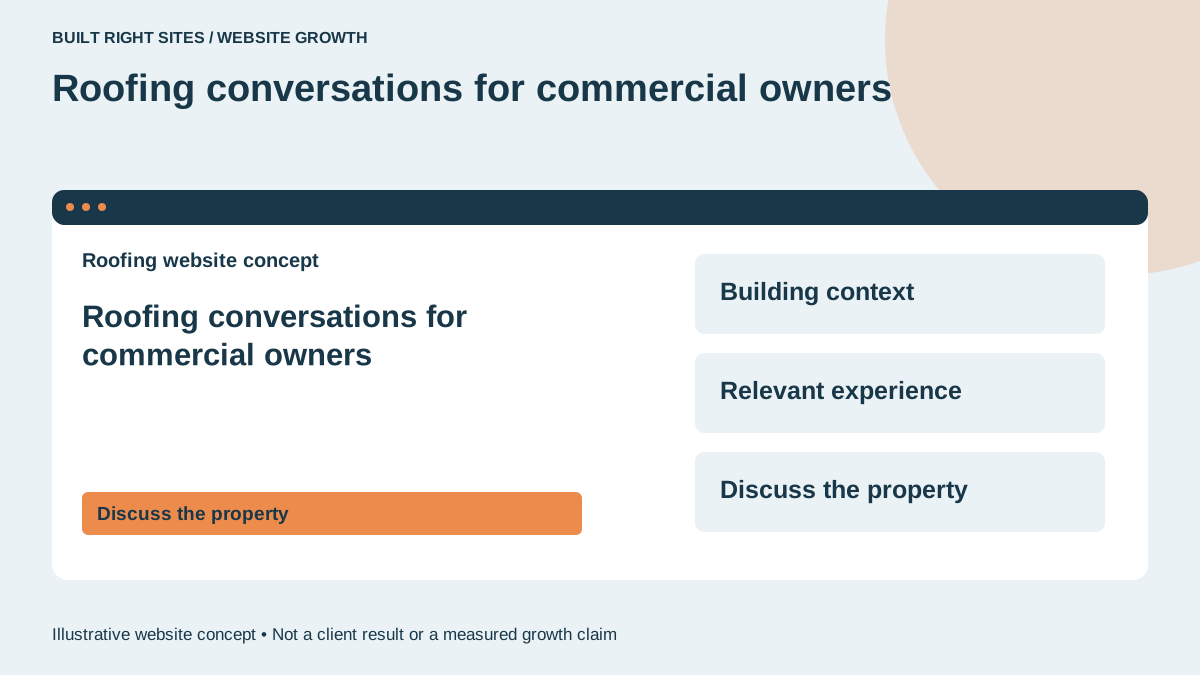
But a website is still only one part of the picture. It can present your services, show relevance, and support discovery, but it cannot promise demand or control who reaches out. If you are considering a website that reflects your services and the properties you want to work on, a homepage concept can be a useful way to see that direction before you decide to pay.
For commercial roofing, the best website is not the loudest one; it is the clearest one. If a facility manager can quickly tell what you do, what kinds of properties you handle, and how to start the conversation, your site has a much better chance of supporting the leads you want.
Related articles
See how your next website could work
A clear site gives interested customers a useful next step. Explore a homepage for your business, then decide whether it fits.
See my free homepageSources and further reading
- Google: Title links — Titles should describe their pages clearly.
Sources checked October 18, 2026. The examples and practical recommendations are our editorial guidance. AI-assisted drafting; reviewed before publication.