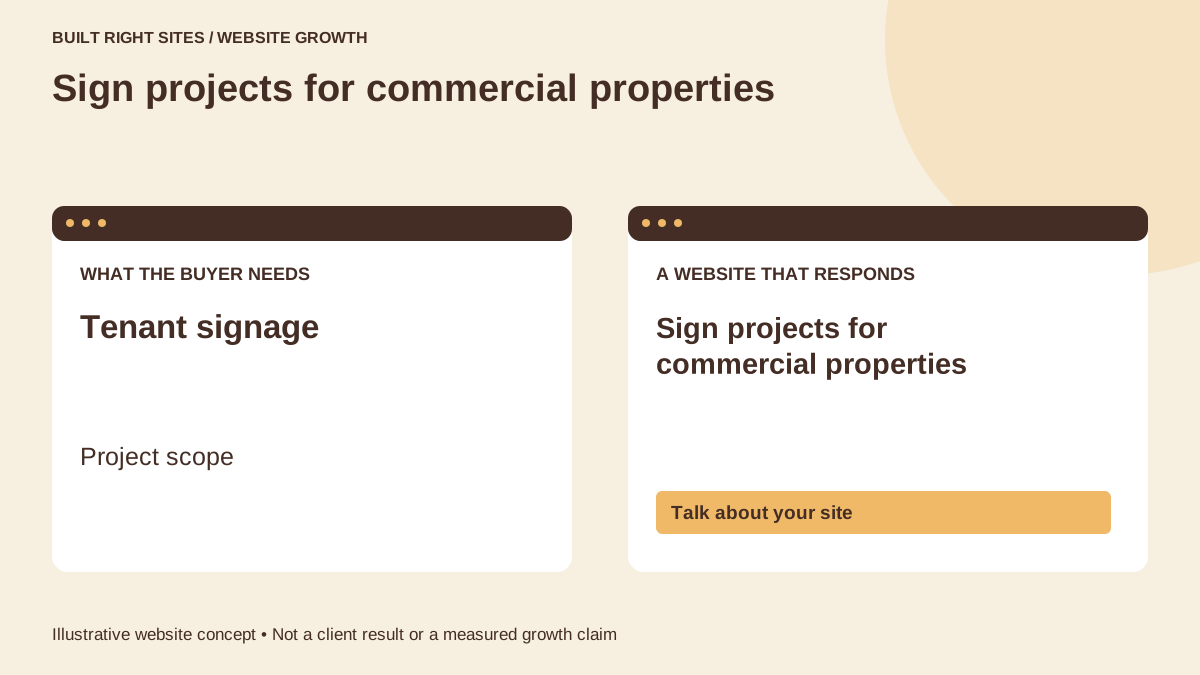
The buyer is not shopping for a single sign
A multi-tenant property manager is often trying to solve a coordination problem, not just buy signage. They may need monument identification, tenant panels, parking notices, and a plan for keeping everything consistent as leases change. If your site only says “custom signs,” it makes the work sound small and vague.
A stronger site helps that buyer picture the full job. Instead of pushing a general banner-shop message, it can show the kinds of commercial projects you handle, the process you follow, and the documents or questions you need before starting. That makes it easier for a manager to decide whether you are set up for a larger scope.
What scope clarity looks like on the page
Commercial buyers usually want to know how the project is broken down. A website can explain the difference between identifying the property, matching tenant signage, and handling installation coordination. That kind of clarity helps a buyer understand where a project begins and what decisions come next.
It also reduces the risk of awkward back-and-forth. If your pages describe materials, mounting options, permitting conversations, and who is responsible for approvals, the buyer can self-qualify before they call. Clear business details help establish identity, which matters when someone is deciding whether your company looks organized enough for a property-level project.
Explore websites for signs businesses for an example of how this can work on a site.
A hypothetical comparison between two shops
Picture two local sign companies. The first has a homepage with a gallery, a phone number, and a line about fast service. The second shows commercial use cases, explains tenant-panel coordination, and includes a simple path for requesting a project review. Both may be capable, but only one gives the property manager confidence that the company understands larger jobs.
A hypothetical before-and-after example makes the difference obvious. Before: “We make signs for any business.” After: “We help commercial properties plan monument identification, tenant updates, and installation-ready signage that matches the site.” The second version does not promise every outcome, but it speaks the language of the buyer and helps separate real capability from generic local advertising.
For the next part of this process, read Help wayfinding sign buyers find you.
Why search discovery matters, and what it can’t do
Search can help if someone is already looking for a sign company for a property project. A page built around commercial intent gives searchers a clearer match than a homepage aimed only at retail walk-ins. That is where how a sign website can attract commercial projects becomes practical: the site gives the buyer a place to land when the need is already there.
The limit is important. A website does not create the project by itself, and it does not guarantee that a property manager chooses you. It simply makes it easier for the right people to understand your services, compare options, and move forward with a request. If the content is thin or too generic, search discovery may not help much because the buyer still cannot tell what you actually do.
A homepage that feels ready for property work
A useful homepage for this kind of buyer should answer three things quickly: what you make, who it is for, and how a commercial project is handled. For a sign business, that can mean service categories, project photos that show scale, and a short explanation of how inquiries are reviewed. The goal is not to overload the page; it is to show that your business is prepared for coordinated work.
Built Right Sites makes business websites and offers a homepage concept before deciding to pay, which can be helpful if you want to see whether your sign company site reflects the services you want to sell. The best version of that site still depends on your real capabilities, your local market, and the clarity of your offer, but it can give commercial buyers a more confident first impression.
For sign companies that want larger commercial projects, the website should feel like a project-intake tool, not just an online brochure. When it explains scope, supports discovery, and shows that you can handle coordination, it gives property managers a better reason to reach out.
Related articles
See how your next website could work
A clear site gives interested customers a useful next step. Explore a homepage for your business, then decide whether it fits.
See my free homepageSources and further reading
- Google: Business details — Clear business details help establish identity.
Sources checked October 18, 2026. The examples and practical recommendations are our editorial guidance. AI-assisted drafting; reviewed before publication.