What the buyer is actually trying to solve
A wayfinding sign buyer often arrives with a practical problem: people keep getting lost, front desks answer the same directions all day, or a building addition made the old signage confusing. That buyer is usually comparing contractors, not admiring portfolios. They want proof that the sign company understands complex spaces and can talk about the project in plain language.
Hypothetical example: a hospital facilities manager searches after hearing complaints from visitors and volunteers. They are not asking, “Who has the fanciest website?” They are asking, “Who can help us map entrances, floors, departments, and visitor paths without turning this into a giant guessing game?” A website that speaks to that situation can earn the next click by sounding relevant instead of generic.
Why a dedicated service page matters
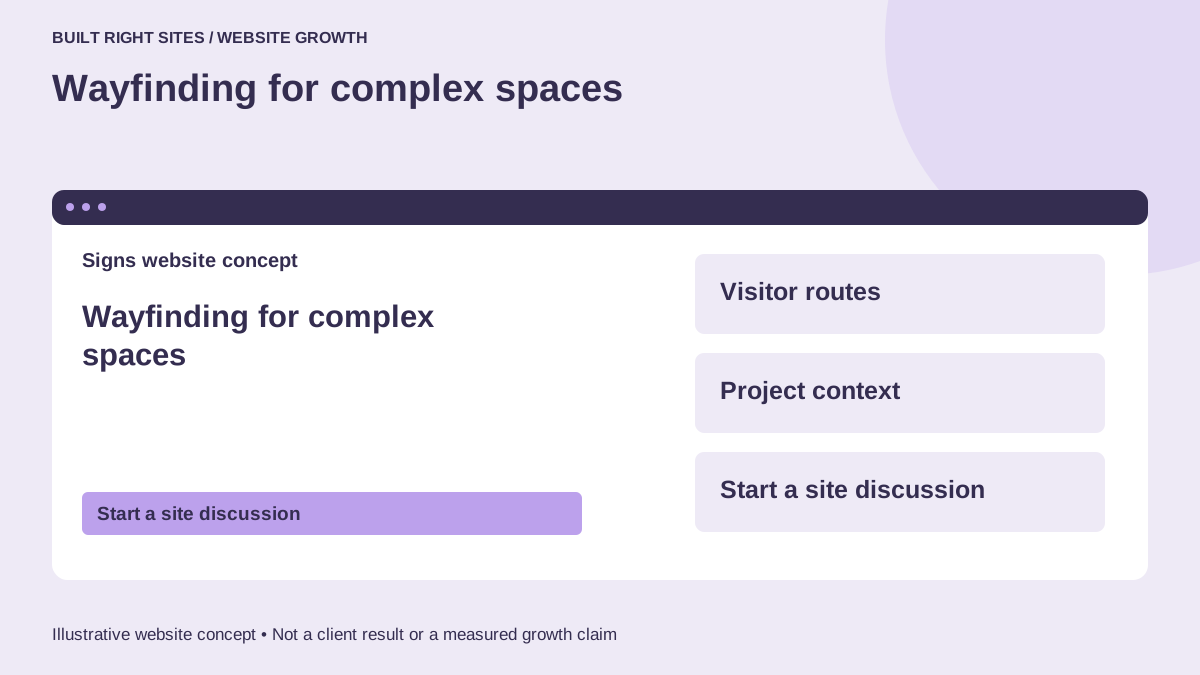
A single homepage can introduce your business, but a dedicated wayfinding page gives the buyer a place to see the right details. That page can explain the kinds of spaces you work in, the role of visitor routes, and what information helps a project move forward. It should be specific enough that a facility manager can tell, quickly, whether you handle the kind of project they have in mind.
Search discovery matters here, but only in a limited, practical sense: search engines index pages, and manipulative pages or keyword stuffing can backfire. A clear page title, a straightforward description of the service, and real project language make it easier for people to understand what you do. That does not guarantee traffic or leads, but it does give your business a better chance to be found by the right local buyer.
Explore websites for signs businesses for an example of how this can work on a site.
The page structure that answers decision-maker questions
Wayfinding buyers often want to know who will be involved, what information they need to gather, and how the discussion starts. A useful page can answer those questions without overwhelming them. Include the types of facilities you serve, the kinds of navigation problems you solve, and a brief explanation of the project conversation so the buyer knows what to expect next.
Before-and-after wording example: before, your site says, “We make signs for businesses.” After, it says, “We help facilities guide visitors through multi-building campuses, lobbies, and departments with wayfinding sign projects built around your layout.” The second version tells a buyer what problem you address and who should contact you, which can make the difference between a pass and an inquiry.
For the next part of this process, read Help commercial sign buyers choose you.
Why project context beats empty promises
Wayfinding work is easier to understand when the website shows context, not hype. A short project story can describe how a buyer typically starts, such as by sharing a floor plan, a building map, or a list of areas that confuse visitors. You do not need to promise compliance outcomes or pretend every site has the same needs; the useful part is showing that you understand the project shape.
That same page can also clarify who the decision-maker should be. A facility manager, operations lead, or property manager may not want to sort through a general contact form built for retail shoppers. If your site makes it obvious that project discussions belong with the right person, you reduce friction and make the first reply easier to continue.
A website should help the conversation start, not replace it
A good website will not design the sign system for free, and it will not solve every facility problem. It can, however, make your business easier to evaluate by showing what kind of projects you handle and what information you need from a prospective buyer. That is often enough to move a cautious facility manager from browsing to contacting.
If you are thinking about a website that reflects your services clearly, it helps to imagine the buyer’s path: search, scan, compare, and decide whether to reach out. Built Right Sites offers business websites and a homepage concept before you decide to pay, which can be a simple way to see whether your sign business presents itself clearly before you move forward. For a wayfinding-focused business, that clarity is often the real starting point.
A website for a wayfinding sign business works best when it speaks to the buyer’s job, not just the business’s services. When it helps the right people understand your project scope, your process, and who should contact you, it can turn an unclear search into a useful first conversation.
Related articles
See how your next website could work
A clear site gives interested customers a useful next step. Explore a homepage for your business, then decide whether it fits.
See my free homepageSources and further reading
- Google: Spam policies — Avoid manipulative pages and keyword stuffing.
Sources checked October 18, 2026. The examples and practical recommendations are our editorial guidance. AI-assisted drafting; reviewed before publication.