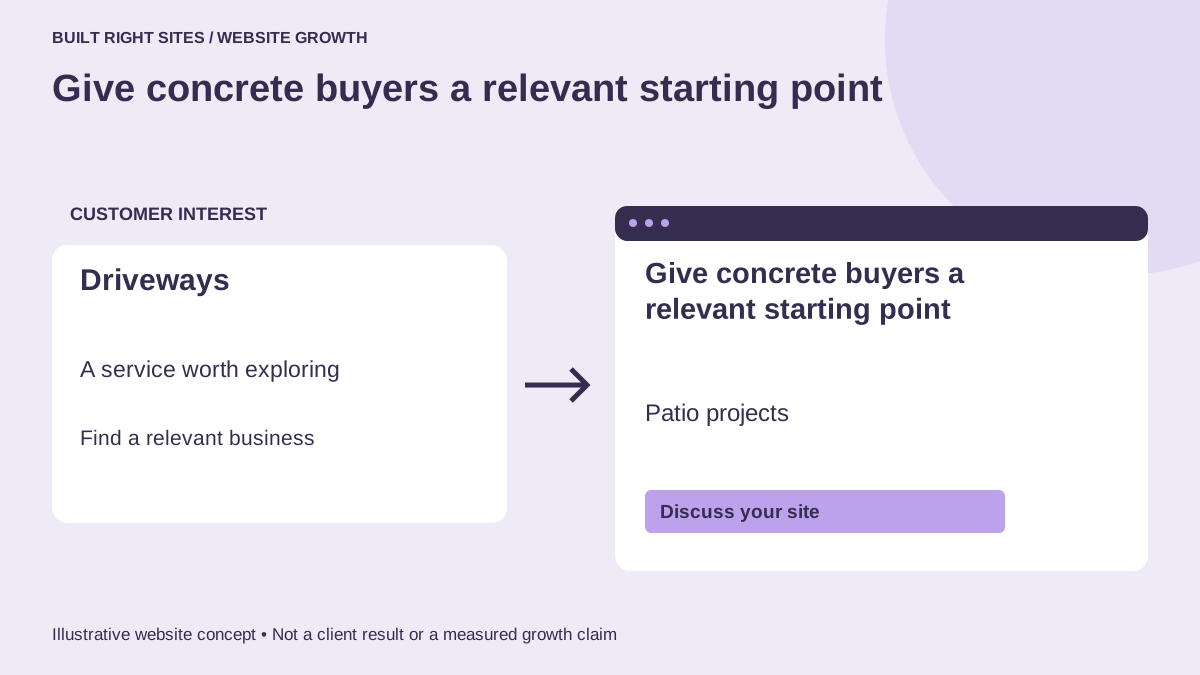
Why one concrete page often feels too vague
If your homepage only says you do concrete work, many visitors still have to guess whether you handle driveways, patios, sidewalks, or commercial flatwork. That guesswork matters because the buyer is usually trying to match a specific project to a contractor who sounds relevant. When the page feels generic, the visitor may leave without ever seeing the part of your business that fits their needs.
A service-specific page gives each type of buyer a clearer path. For example, a homeowner comparing patio contractors is not looking for the same proof points as a business owner planning a parking area. Separate pages help the visitor recognize, “this company does the kind of project I need,” instead of forcing them to decode a broad concrete summary.
A hypothetical buyer journey from search to inquiry
Hypothetically, imagine a homeowner searching on a phone after getting tired of a cracked backyard slab. They land on a page titled Patio Concrete Services, see photos of finished patios, read a short explanation of the process, and notice that the company works on backyard replacements and new pours. That person is not ready to hire yet, but the page answers the immediate question: does this contractor handle my kind of project?
Now compare that with a more generic experience. The same homeowner lands on a homepage that mostly talks about being a local concrete contractor. They still may not know whether the company does decorative patios, whether it handles removal, or whether it is better suited to driveways. A service page shortens that uncertainty by showing a specific starting point before the buyer decides whether to call or submit a form.
Explore websites for concrete businesses for an example of how this can work on a site.
What to put on each service page
A strong service page should read like a focused introduction, not a recycled homepage. For a patio page, that could mean describing the kinds of patios you build, the typical project conversation, the neighborhoods or property types you serve, and a few examples of what buyers often ask first. For a driveway page, the questions may be different: replacement versus new install, width changes, site access, and how the estimate process works.
The page should also make it easy for the visitor to picture next steps. That can include a short list of project types, a few natural photos from similar work, and plain language about how you start estimates. Search discovery can help here because page content may be used in search snippets. That does not guarantee visibility, but it does mean the page copy should clearly describe the service instead of hiding it in general company language.
For the next part of this process, read Get clearer fence quote requests.
How to separate patios, driveways, and commercial flatwork
The biggest mistake is grouping every project under one catch-all heading. Driveways, patios, and commercial flatwork may all involve concrete, but the buyer intent is different. A patio buyer may care about shape, finish, and backyard use. A driveway buyer may care about access, replacement timing, and curb appeal. A commercial buyer may be focused on access, scope coordination, and the practical details that matter to a property manager.
A useful website separates those paths without overcomplicating the menu. Each page can speak to one project type, use its own examples, and answer the questions that matter most to that audience. That structure helps people self-select faster, which can improve the quality of the inquiries you receive, even if the total number of visitors stays the same.
A better website is clearer, not louder
A common misconception is that a new website should try to say everything at once. For a concrete contractor, that usually creates more noise than clarity. Buyers do not need a long list of capabilities before they can trust the business; they need to know whether the company handles their specific project and whether the site feels current and relevant to that decision.
If you are planning a new site, think about whether it reflects the actual services people ask for most, especially if you want to attract concrete project leads with service-specific pages. Built Right Sites offers business websites and a homepage concept before you decide to pay, which can be a practical way to see whether the structure matches your services before moving forward. The goal is not to promise every feature, but to give visitors a better first impression of what you do and who you help.
A concrete website works best when it helps the right buyer recognize the right service quickly. Clear pages for patios, driveways, and commercial flatwork can make your business easier to understand, while still leaving room for the phone call, estimate, and project conversation that follow.
Related articles
See how your next website could work
A clear site gives interested customers a useful next step. Explore a homepage for your business, then decide whether it fits.
See my free homepageSources and further reading
- Google: Search snippets — Search snippets may use page content.
Sources checked October 18, 2026. The examples and practical recommendations are our editorial guidance. AI-assisted drafting; reviewed before publication.