Why fence buyers ask differently online
Fence customers rarely start with a perfect project description. A homeowner may know they want more privacy in the backyard but not know how to explain height, material, or layout. A commercial buyer may care more about access, visibility, and use than the fence style itself. A good website helps each visitor find the right path before they ever fill out a form.
That matters because quote requests are clearer when the site separates needs by project type. Instead of asking everyone to start from the same generic contact box, the site can point people toward the kind of fence they are actually considering. One paragraph that says “privacy fences for homes, boundary and access fencing for businesses” can do a lot of sorting before the first call.
A homepage that answers fit before price
A fence company homepage does not need to explain every material or every service in one breath. It needs to help visitors decide whether they are in the right place. That means a clear headline, a short description of the kinds of projects you handle, and a contact action that feels specific rather than vague. For many buyers, the strongest message is simply that they can start with a conversation about the site, the use, and the goals.
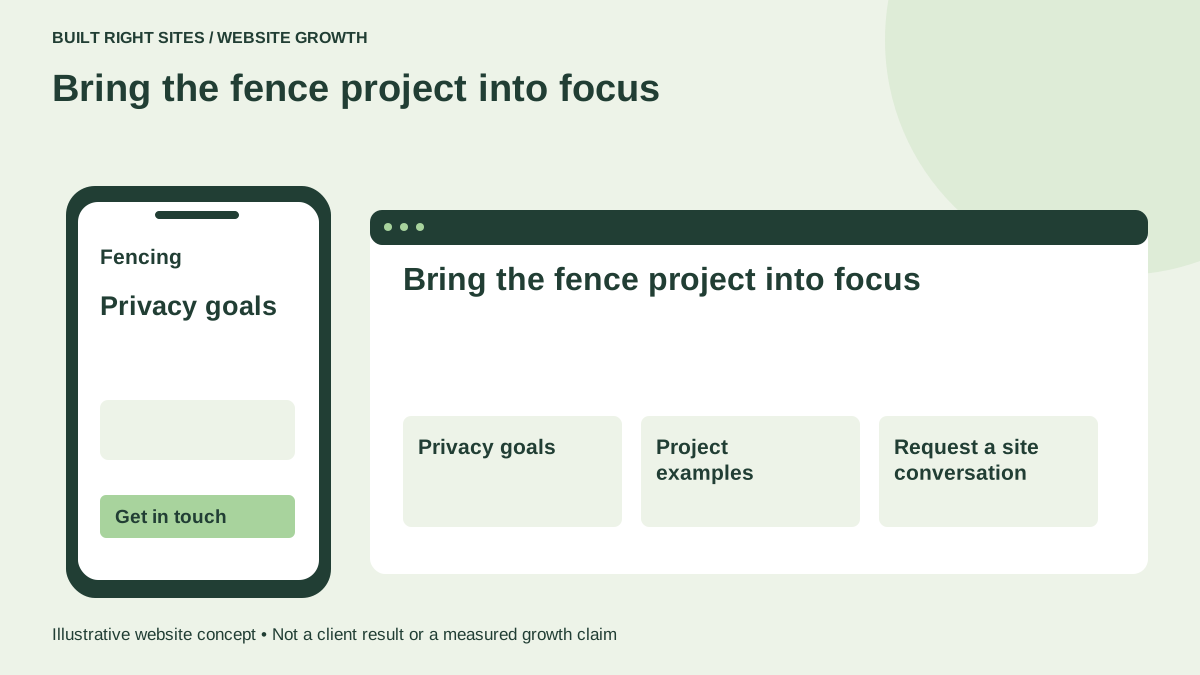
Hypothetical example: a homeowner lands on a site after searching for backyard privacy fencing. The old site says only “contact us for a quote.” The newer version says “Talk through your privacy goals, property layout, and style preferences.” That small shift makes the request feel easier. The buyer is not expected to know everything, only enough to begin. The same idea works for commercial buyers who need a fence for access control or a defined work area.
Explore websites for fencing businesses for an example of how this can work on a site.
Simple content that helps buyers sort themselves
The most useful fence website content often explains situations, not just products. A page about privacy fencing can mention common reasons people ask for one: reducing street views, creating a quieter yard, or making a patio feel more usable. A page for commercial fencing can describe use cases like separating equipment areas, guiding traffic, or defining a perimeter. This kind of wording helps people recognize their own project faster.
You do not need to write a sales brochure. Short sections, labeled examples, and a few real-world phrases are enough. A homeowner may be searching for a “backyard privacy fence,” while a business owner may type “commercial fence around loading area.” Those visitors do not need identical copy. They need language that matches how they think about the job and encourages a quote request with the right context attached.
For the next part of this process, read Help concrete buyers find the right service.
Where search discovery fits, and where it does not
SEO can help a fence company website get found when people search for project-specific terms, but it does not magically create demand. It is one way buyers discover a business after they already have a need. For that reason, the site should be built to make discovery useful: clear service pages, understandable headlines, and mobile-friendly pages that are easy to read on a phone. Google indexes the mobile version of content.
The limit is important. A strong site may bring more relevant visitors, but it cannot force them to request a quote. It also cannot replace a timely response, a clear service area, or a sensible follow-up process. Think of search as the door and the website as the room behind it. If the room explains the project well, more visitors may stay long enough to ask for help. If it does not, they leave with the same uncertainty they arrived with.
A before-and-after quote request journey
Before: a property owner finds your business, scans the homepage, and still cannot tell whether you handle residential privacy fences, commercial boundary projects, or both. The form asks for too much too soon, so the visitor hesitates. They may leave, or they may send a vague note that says only “need fence info.” That kind of inquiry takes extra back-and-forth and often slows the conversation.
After: the homepage immediately points visitors toward the right type of project, with simple examples and a clear next action such as requesting a site conversation. The visitor sees wording that matches their situation, understands that they do not need to know every detail, and submits a more useful inquiry. If you are planning a website that reflects the way your fencing services are actually sold, Built Right Sites can help shape that first impression with a homepage concept before you decide to pay.
The best fence company websites do not try to impress every visitor with endless detail. They help the right people recognize their project, understand the fit, and take the next step with less friction. That is what turns a casual browse into a better quote request.
Related articles
See how your next website could work
A clear site gives interested customers a useful next step. Explore a homepage for your business, then decide whether it fits.
See my free homepageSources and further reading
- Google: Mobile-first indexing — Google indexes the mobile version of content.
Sources checked October 18, 2026. The examples and practical recommendations are our editorial guidance. AI-assisted drafting; reviewed before publication.