The inquiry problem behind “more leads”
Many painting owners say they want more calls, but what they usually need is better-fit calls. A website can help by making the difference between a full interior repaint and a small touch-up clear before a prospect ever fills out a form. That saves time for both sides and makes the business look more organized.
Hypothetical example: a homeowner lands on your site after searching for interior painting, sees a page that describes occupied-home work, furniture protection, and room-by-room planning, and decides to ask about repainting the whole first floor. Another visitor looking for a quick patch job realizes your company is not the best match and moves on without wasting your office staff’s time.
Pages that answer the questions people actually ask
A painting website works best when each main page answers one real buying question. Homeowners want to know how you handle occupied rooms, what kind of prep is included, how you protect floors and furniture, and whether you take on homes, offices, or both. Clear pages reduce uncertainty, which matters when a job is inside someone’s lived-in space.
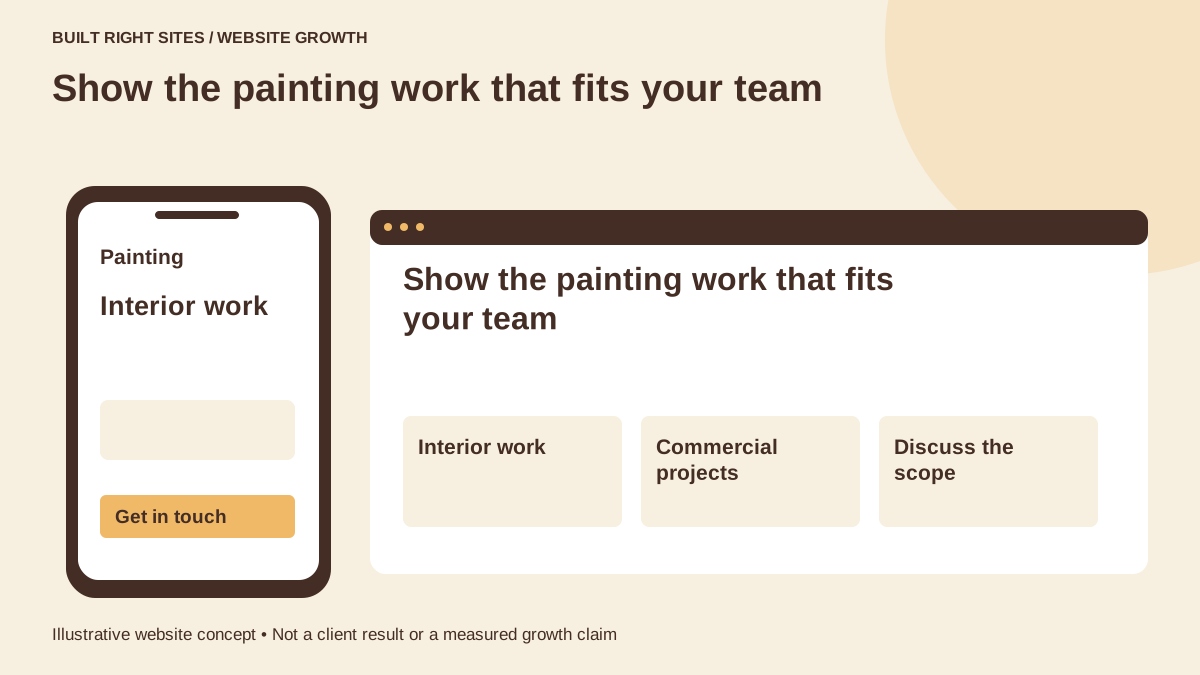
Service pages can also separate residential interior work from commercial repainting so visitors do not have to guess. A gallery or project page helps, but only if it shows the kind of work your team wants next. If your crew is strongest at full-home interiors, say that plainly and show completed rooms, not only trim touch-ups or exterior shots.
Explore websites for painting businesses for an example of how this can work on a site.
Search discovery works when the page matches the task
SEO can help search engines understand content. That matters because people often search with specific intent, not just a trade name. A page that clearly discusses interior repainting, preparation, and scope gives discovery systems more context than a homepage that says only “quality painting services.”
Still, search visibility is not a promise. A website does not create demand out of thin air, and it does not replace reputation, referrals, or pricing that fits your market. It simply gives interested people a place to confirm whether your company handles the kind of painting job they are trying to book.
For the next part of this process, read Turn kitchen interest into consultations.
Before and after: what a better site sounds like
Hypothetical before: “We paint homes and businesses.” That line is honest, but it does not help a visitor know what happens next. A better version might read, “We handle occupied interior repainting, commercial refreshes, and detailed prep for projects that need a careful finish.” That wording gives people a reason to keep reading.
The same idea applies to the quote request. Instead of a generic “contact us,” the page can invite visitors to describe the number of rooms, whether the home is occupied, and the type of property. Those details help the owner decide if the job is a fit before a visit is scheduled, which is especially useful when the business wants larger interior projects.
Why the homepage should point to fit, not just features
The homepage often gets too busy trying to say everything at once. For a painting company, it should quickly tell visitors what kind of work the team prefers, what makes that work easier, and where to go next. If a homeowner is comparing several painters, that clarity can be the difference between a bounce and an inquiry.
Near the end of the process, it can help to consider a website that reflects your actual services, especially if your current site hides the jobs you want more of. Built Right Sites builds business websites and offers a homepage concept before deciding to pay, which can be useful when you want to see whether the structure matches your painting business before moving forward.
A good painting website does not promise more jobs, but it can make your best-fit jobs easier to understand and easier to request. If you want more whole-home interior inquiries, the right pages, plain language, and a clear path to contact can make your business feel like the right choice for the right customer.
Related articles
See how your next website could work
A clear site gives interested customers a useful next step. Explore a homepage for your business, then decide whether it fits.
See my free homepageSources and further reading
- Google: SEO Starter Guide — SEO helps search engines understand content.
Sources checked October 18, 2026. The examples and practical recommendations are our editorial guidance. AI-assisted drafting; reviewed before publication.