From emergency call to ongoing customer
A lot of pest control inquiries start the same way: someone finds a problem, wants help fast, and only thinks about today’s issue. If your website only talks like a one-and-done contact form, it can leave out the people who actually want a steady service plan, seasonal check-ins, or a simple way to stay ahead of repeat problems. The website does not create that need, but it can make your ongoing options easier to notice and compare.
Hypothetical example: a homeowner searches late at night after seeing signs of ants in the kitchen. One website says only “Request service.” Another says “Ask about one-time treatment or recurring service options” and explains what each path is for in plain language. The second site is more likely to prompt a conversation that fits future care, not just a single visit.
What the homepage should make obvious
For this kind of business, the homepage should answer three simple questions quickly: what you handle, whether you offer ongoing service, and how someone can start a conversation. That means using short service descriptions, a visible contact path, and wording that separates recurring plans from emergency calls without sounding complicated. A visitor should not have to hunt through five pages to understand whether your company fits a property that needs regular attention.
The most useful copy is often practical rather than flashy. For example, “Choose a one-time visit or ask about regular service” is clearer than vague language about being a full-service solution. If the website also shows service area details and the kinds of properties you work with, it can help the right customer self-identify faster and avoid filling out a form that does not match what they need.
Explore websites for pest control businesses for an example of how this can work on a site.
Why local search still matters
People often start with a search when they are comparing nearby providers, especially if they are unsure whether they need a one-time fix or a longer-term plan. That is where SEO fits in: SEO helps search engines understand content. In practice, that means your pages should clearly say what the business does, where it works, and which service options are available, so the site can be understood more easily when someone searches locally.
That said, discovery through search has limits. A website cannot force a homeowner to want recurring service, and it cannot replace trust. It can, however, make it easier for someone already looking for a local pest control company to recognize that your business offers more than a single appointment. That distinction matters when you want fewer dead-end inquiries and more conversations about ongoing service.
For the next part of this process, read Connect with nearby pool service customers.
A better service page beats vague promises
Many pest control sites mention “prevention” but never explain what a customer can actually ask for. A stronger service page names the conversation: recurring visits, seasonal plans, follow-up timing, and what questions a customer can bring up before deciding. That gives the visitor a reason to continue reading instead of assuming the company only handles urgent calls. It also helps set expectations without making claims you cannot support.
For example, a property manager may want to know whether your company can discuss regular checks for multiple units, while a homeowner may want a simple reminder-based plan for common seasonal issues. If your page clearly says, “Tell us whether you need a one-time visit or recurring service discussion,” it makes the next step feel easy. That is often more effective than a long paragraph about quality, because it matches the buyer’s actual decision.
A homepage concept that supports repeat interest
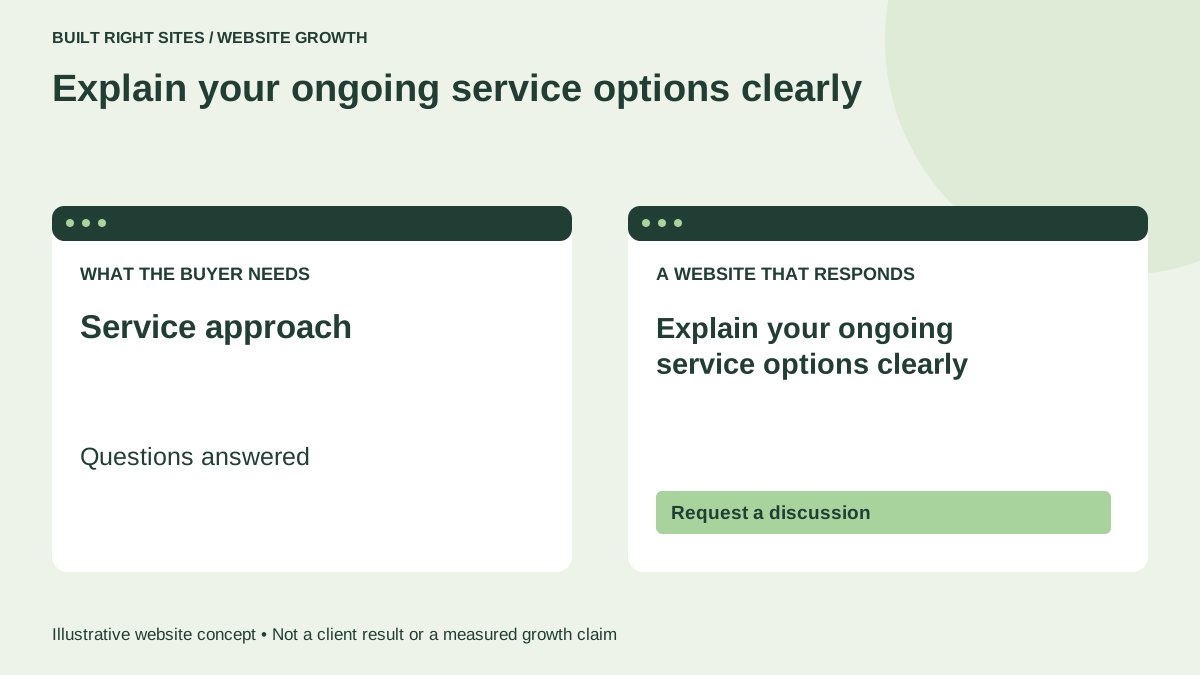
Built Right Sites offers business websites, and for a pest control owner thinking about a new site, a homepage concept before deciding to pay can be a useful way to see how recurring service messaging might look on the page. The point is not to overload the site with features, but to make the service approach, the questions answered, and the request for a discussion visible in the right places.
Imagine the before-and-after difference in plain language. Before: “Call now for pest control.” After: “One-time help or ongoing service options for homes and properties.” The second version does not promise results, but it does tell a visitor what kind of relationship they can start. If you are weighing a website that reflects your pest control services, that clarity can make the site feel more relevant to the customers you want to hear from next.
A pest control website works best when it treats recurring service as a real choice, not a hidden extra. Clear pages, local discovery, and straightforward wording can help turn a single inquiry into a longer conversation about ongoing care, while still staying honest about what the business offers.
Related articles
See how your next website could work
A clear site gives interested customers a useful next step. Explore a homepage for your business, then decide whether it fits.
See my free homepageSources and further reading
- Google: SEO Starter Guide — SEO helps search engines understand content.
Sources checked October 18, 2026. The examples and practical recommendations are our editorial guidance. AI-assisted drafting; reviewed before publication.