The first question a homeowner is really asking
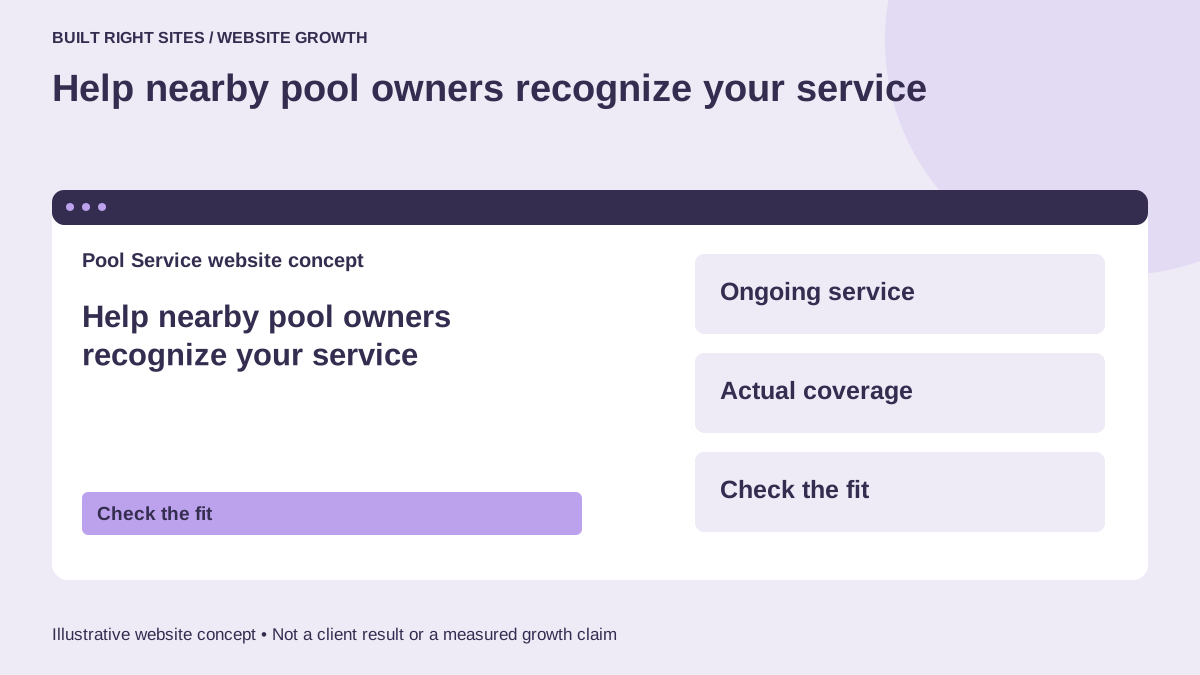
When someone searches for pool help, they usually are not hunting for a long explanation of your business history. They want to know whether you serve their area, whether you handle ongoing service or one-time repairs, and whether they should call now or keep looking. A website can answer those basics in plain language without making the visitor work for it.
A strong homepage and a few focused service pages can do that well. Instead of burying the essentials, you can show the neighborhoods or routes you cover, say whether you focus on maintenance or equipment repair, and make the next step obvious. Google says titles should describe pages clearly, and that same idea applies to your visible page headings and copy.
Why route fit matters more than broad claims
Pool service is local in a very practical way. If your weekly route is clustered in certain suburbs, a visitor 30 miles away may not be a good fit even if they like your work. A useful website helps prevent wasted calls by making your service area visible before someone reaches out. That saves time for the homeowner and for you.
Hypothetical example: a homeowner in one neighborhood lands on your site after searching for nearby pool service. Your page says you handle recurring maintenance in select areas and offer equipment repairs where routing allows. The person sees their town listed, understands the scope, and uses the contact form. Another homeowner in an out-of-area zip code gets a clearer signal too, which reduces back-and-forth later.
Explore websites for pool service businesses for an example of how this can work on a site.
Maintenance and repair should not sound interchangeable
Many pool owners need help, but not always the same kind. A person with a green pool and a broken pump is looking for a different conversation than someone who simply wants weekly cleaning and water checks. If your website blurs those two services together, visitors may assume you handle everything, then feel disappointed when they call.
A better structure is simple: one page for ongoing service, another for equipment repair, and clear notes about what each includes. That helps a prospect self-sort. It also lets you avoid awkward misunderstandings, because the website can say what you do and what you do not do without sounding defensive or overly technical.
For the next part of this process, read Explain recurring pest control clearly.
How local discovery fits without overpromising
A website does not magically create demand, and it should not be treated like a switch that turns on leads. What it can do is make your business easier to find and easier to choose when someone nearby is already looking. For a local pool service company, that often means matching the language people use for nearby help, then presenting enough local detail that the site feels relevant.
That is where discovery matters: clear service-area wording, concise page titles, and location references that reflect how customers actually search. Keep the focus on being understandable rather than stuffing pages with every town name you can think of. The goal is to help the right visitor recognize, quickly, that your company serves pools like theirs in places you can reasonably reach.
A better homepage when the business is still growing
If you are newer to the market, your website should work like a clear introduction, not a giant brochure. Visitors should see who you help, what kind of pool work you take on, and how to contact you. Short pages can still be persuasive when they are specific. A homeowner does not need a long story; they need confidence that you are a real local business with the right kind of service.
Hypothetical before-and-after wording helps here. Before: “We provide complete pool solutions for all customers.” After: “We provide recurring pool maintenance for nearby homeowners and selective equipment repair in our service area.” The second version is more useful because it sets expectations, reduces confusion, and makes the business feel easier to contact. If you are considering a website that reflects your services clearly, a homepage concept can help you picture that fit before you decide to pay.
For a pool service business, a good website is less about showing everything and more about helping the right nearby customer understand your route, your service scope, and the next step. When those pieces are clear, your site can support more useful inquiries and fewer mismatched calls, even if results still depend on the market and how people search.
Related articles
See how your next website could work
A clear site gives interested customers a useful next step. Explore a homepage for your business, then decide whether it fits.
See my free homepageSources and further reading
- Google: Title links — Titles should describe their pages clearly.
Sources checked October 18, 2026. The examples and practical recommendations are our editorial guidance. AI-assisted drafting; reviewed before publication.