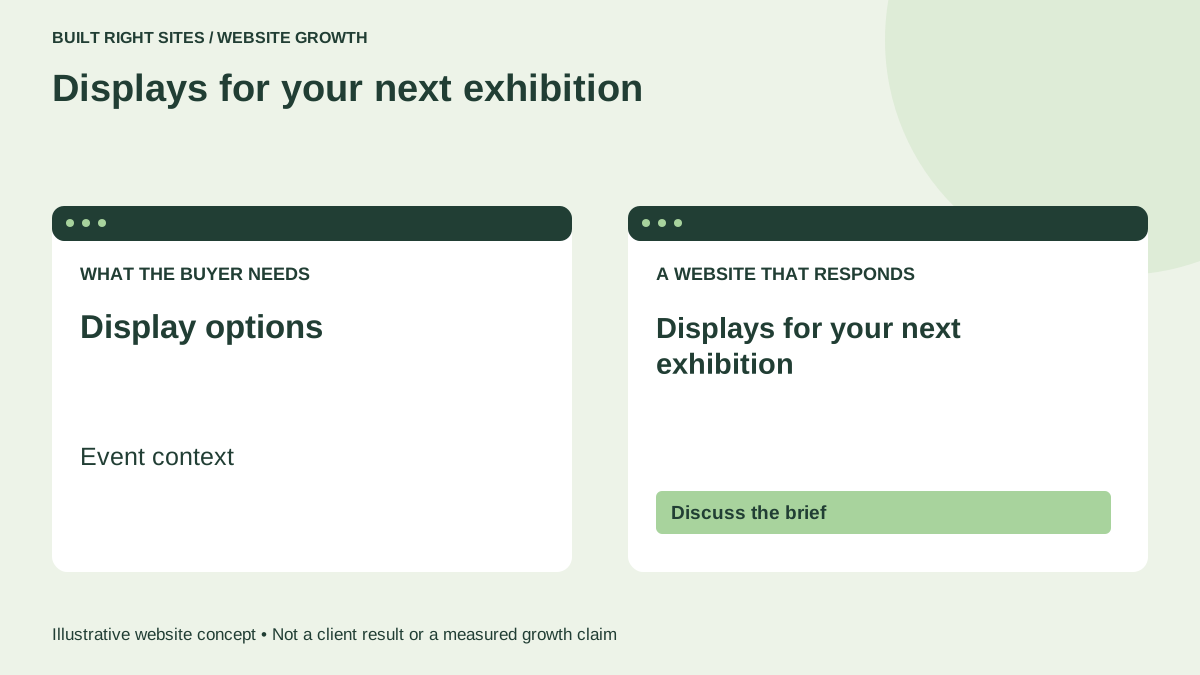
What a trade show buyer is trying to figure out
A business owner planning for an exhibition usually starts with a practical question: what will work for this event and what can be reused later? That buyer may not be shopping for a single poster at all. They may be comparing backwall displays, hanging signs, portable hardware, or graphic refreshes for a booth they already own.
A useful website helps by organizing those choices in plain language. Instead of making visitors dig through a general services page, the site can show where the company handles display design, where it supplies the hardware or graphics, and whether installation is available. That separation matters because buyers often need to know what belongs in the quote request before they decide whether to reach out.
A simple path from search to inquiry
In a search journey, the buyer may arrive with a phrase like trade show display company or exhibition graphics and then scan for one thing: a page that feels relevant to their event. If the page shows vague signage language only, they may leave without asking a question. If it speaks directly to display projects, event timelines, and booth needs, they are more likely to keep reading.
Sitemaps aid discovery, without assuring indexing. That is the modest SEO reality to keep in mind. A website cannot force visibility, but it can make it easier for search engines and visitors to understand what the business offers. Just as important, it can give the buyer a clear next step, such as requesting help with a specific display concept rather than sending a generic contact form with no context.
Explore websites for signs businesses for an example of how this can work on a site.
Reusable displays need different content than event posters
Many sign businesses blur reusable exhibition displays and short-term event graphics into the same service bucket. That can confuse the buyer who is trying to decide whether they need something built to travel, something easy to update, or something meant for one show only. A stronger website draws that line clearly.
For example, a hypothetical exhibitor might compare a lightweight display frame for three events this year with a one-off poster for a local seminar. If the website explains the difference in material, setup, and use case, the buyer can quickly self-sort. They do not need a hard sell. They need confidence that the company understands the practical difference between reusable booth assets and event-only print pieces.
For the next part of this process, read Help print buyers place better requests.
Before and after a better homepage conversation
Here is a hypothetical before-and-after example. Before: a buyer lands on the homepage, sees a broad list of printing and signage services, and still cannot tell whether the company handles exhibition displays, can supply replacement graphics, or only makes storefront signs. After: the homepage says, in effect, that the company helps businesses plan trade show displays, supply the needed pieces, and discuss install availability for the venue.
That kind of wording does not promise a sale. It simply reduces friction. The buyer can move from curiosity to a more useful question: do I need a new display concept, just graphics for an existing setup, or help with both? When a website answers that early, the conversation gets better, and the inquiry is more likely to fit the work the company wants to do.
Where a redesign can help and where it cannot
A redesign is worth considering when the current site reads like a general sign shop brochure, hides exhibition work inside a long menu, or makes every visitor guess what to ask for. If the goal is to attract trade show display buyers with a better website, the page structure should make event use cases easy to spot and easy to separate from ordinary signage.
It is still important to stay realistic. A site can improve clarity, support discovery, and reduce confusion, but it cannot guarantee demand, rankings, or inquiries. The best outcome is usually a more relevant conversation with the right buyer. For a sign business thinking about a website that reflects its services, a homepage concept can be a useful starting point before deciding to pay. Explore websites for signs businesses.
Trade show buyers are often looking for a practical explanation, not a flashy pitch. If your website helps them understand what is reusable, what is event-specific, and how to ask for the right kind of help, it can support better inquiries and cleaner sales conversations.
Related articles
See how your next website could work
A clear site gives interested customers a useful next step. Explore a homepage for your business, then decide whether it fits.
See my free homepageSources and further reading
- Google: Sitemaps — Sitemaps aid discovery, not guaranteed indexing.
Sources checked October 18, 2026. The examples and practical recommendations are our editorial guidance. AI-assisted drafting; reviewed before publication.